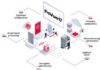
The wearable Internet of Things (IoT) devices market represents one of the most dynamic and transformative segments within the technology industry today. As enterprises and consumers increasingly rely on connected devices for health, fitness, productivity, and industrial applications, wearable IoT devices are evolving rapidly to meet diverse demands. This article dives deep into the key market challenges, technical developments, leading companies, major innovations, and the future trajectory of wearable IoT devices from a B2B perspective.
Market Challenges in Wearable IoT Devices
Despite strong growth prospects, the wearable IoT devices industry faces several significant challenges that companies must navigate.
1. Differentiation and Value Proposition
As the wearable market matures, creating distinct value propositions becomes

increasingly difficult. Many devices offer overlapping features such as activity tracking, heart rate monitoring, and sleep analysis. OEMs struggle to innovate beyond these baseline capabilities, mainly due to limitations in current sensor technology and regulatory constraints for advanced medical metrics. Unique, clinically validated health metrics remain a high barrier to entry for new players, constraining differentiation opportunities.
2. Cost Pressures and Affordability
The rising cost of living globally impacts discretionary spending on wearables, which often come with premium prices. Consumers and businesses alike are cautious with budgets, especially for devices involving high-end sensors or advanced AI capabilities. To mitigate this, companies are experimenting with alternative business models like subscription services or hardware-as-a-service arrangements that lower upfront costs but require ongoing payments.
3. Data Privacy and Security
Security vulnerabilities in wearable-to-network connections represent a critical challenge. Given that wearable devices collect highly sensitive personal data, including physiological, location, and behavioral information, breaches could erode user trust and impede adoption. Meeting stringent privacy regulations such as GDPR and HIPAA is costly and complex, potentially delaying product launches and limiting innovation as companies prioritize security over rapid feature introduction.
4. Technical Usability and Integration
Ensuring ease of use while integrating sophisticated features remains a tough balancing act for device designers. Wearables must deliver accurate data without sacrificing comfort, battery life, or seamless connectivity. Additionally, integrating wearables into broader enterprise IoT ecosystems adds complexity for businesses, requiring interoperability standards and robust backend analytics platforms.
Technical Developments in Wearable IoT Devices
Technological advances are driving the next wave of wearable IoT innovation, expanding the capabilities and applications of these devices.
Advanced Sensors and Biometric Monitoring
Modern wearables increasingly leverage sophisticated sensors capable of monitoring ECG, blood oxygen saturation, respiratory rate, and even stress levels. These sensors provide healthcare providers and businesses with richer, more actionable insights, enhancing preventive care, chronic disease management, and employee wellness programs. Smart clothing with embedded micro-sensors is also gaining importance for continuous physiological tracking without additional user burden.
AI-Powered Analytics
Embedded AI and machine learning algorithms are transforming wearables from mere data collection tools into intelligent health and performance advisors. AI enables predictive health monitoring, personalized recommendations, and anomaly detection, which benefit both end users and enterprises managing workforce health. Generative AI integration furthers this potential by enhancing conversational virtual assistant capabilities and health scoring models.
Extended Battery Life and Wireless Charging
One of the most significant technical challenges for wearable IoT is limited battery capacity. Recent breakthroughs focus on energy-efficient components, optimized firmware, and wireless charging solutions that significantly extend device uptime. This evolution is critical for medical-grade wearables requiring continuous monitoring and real-time data transmission.
Enhanced Connectivity and Interoperability
Wearables are now seamlessly integrating with broader IoT frameworks and smart ecosystems through advanced Bluetooth, 5G, and low-power wide-area networks (LPWAN). These connectivity improvements facilitate real-time monitoring, remote device management, and integration with enterprise resource planning (ERP) and customer relationship management (CRM) platforms for enhanced business intelligence.
Major Companies in Wearable IoT Devices
Several key players dominate the wearable IoT space today, leveraging technology expertise and strategic market positioning to drive growth.
| Company | Specialty | Key Strengths and Innovations |
| Apple | Smartwatches & health IoT wearables | Advanced biometric sensors, FDA-approved health features, AI integration |
| Samsung | Smartwatches & smart glasses | Sleep apnea monitoring, AFib detection, innovative smart glasses |
| Garmin | Fitness & outdoor wearables | High-precision GPS, durable designs, sports analytics |
| WHOOP | Health-focused fitness wearables | Screenless design, AI-driven recovery and strain monitoring |
| Ultrahuman | Biohacking & fitness wearables | Community-driven fitness tracking with AI coaching |
| General Prognostics (GPx) | Medical IoT devices | Non-invasive remote chronic disease monitoring |
| HCLTech | IoT platforms & analytics | Enterprise IoT solutions with sustainability focus |
| Cognizant | IoT advisory & connected systems | Large-scale IoT deployments, cybersecurity expertise |
These companies are pushing the boundaries in wearable health monitoring, fitness tracking, enterprise IoT integration, and AI-enabled analytics, helping shape the future business landscape.
Key Innovations in Wearable IoT
The current innovation landscape in wearable IoT devices is particularly exciting, with several breakthroughs setting new industry standards.
AI-Driven Predictive Healthcare
Artificial intelligence embedded directly into wearables enables real-time, predictive health insights. Devices can now provide early warnings on cardiovascular conditions, glucose fluctuations, or respiratory issues, empowering users and healthcare providers to take timely actions. This trend drives the transition from reactive to preventive healthcare models.
Smart Clothing and Textile Integration
Wearable technology is becoming virtually invisible as sensors are woven into fabrics. Smart garments monitor muscle activity, respiratory rate, and body temperature continuously, ideal for athletes and industrial workers requiring non-intrusive health tracking. Major apparel brands are investing heavily in this area, signaling a new frontier in wearable adoption.
Multi-Modal Biometric Sensing
Combining multiple biometric inputs—such as ECG, blood oxygen, motion, and skin temperature—into a single device increases data accuracy and utility. Such integrated sensing improves diagnostic potential and user experience while enabling complex analytics and health profiling in real-world environments.
Beacon and Location-Based Services
Wearables equipped with beacon technology enhance user experiences by enabling personalized interactions in retail, events, and enterprise settings. These location-aware capabilities enable businesses to deliver targeted marketing, asset tracking, and employee safety solutions with precision.
The Future of Wearable IoT Devices
Looking ahead, the wearable IoT space is poised for transformative growth with opportunities across healthcare, enterprise, consumer, and industrial sectors.
Expansion in Healthcare and Medical Applications
Wearables will become indispensable tools for continuous health monitoring, chronic disease management, and remote patient care. Implantable biosensors and miniaturized devices will offer unprecedented accuracy and user convenience, changing the healthcare delivery model fundamentally.
Enterprise and Industrial IoT Integration
Enterprises will increasingly embed wearables into their IoT strategies to enhance workforce safety, productivity, and operational efficiency. Smart glasses for remote assistance, wearable sensors for hazardous environment monitoring, and connected PPE (personal protective equipment) will become standard in many industrial sectors.
AI and Digital Twins
The fusion of AI with digital twin technology—virtual models of physical systems—will enable wearables to simulate, predict, and optimize human performance and health outcomes. This level of intelligent interaction will yield highly personalized user experiences and superior risk management.
Privacy and Security Evolution
As data breaches remain a top concern, wearable IoT vendors will continue to invest in advanced encryption, anonymization, and blockchain-based data integrity tools. Compliance with evolving global privacy regulations will be critical for market expansion and consumer trust.
Market Growth Forecast
The global wearable technology market is expected to grow from approximately $84 billion in 2025 to surpass $150 billion by 2030. Growth drivers include expanding use cases, better technology integration, and increasing enterprise adoption, making wearable IoT devices a cornerstone of the connected future.
Conclusion
Wearable IoT devices are rapidly evolving from simple fitness trackers to sophisticated, AI-powered health and productivity tools critical to numerous B2B and consumer applications. While challenges such as cost, data security, and differentiation persist, ongoing technical advancements and innovative business models are opening new markets and opportunities. The future of wearable IoT will be defined by seamless integration, pervasive sensing, and intelligent analytics, reshaping how businesses manage health, safety, and efficiency.
Industry leaders who focus on advanced sensor development, AI integration, and robust security frameworks will be best positioned to thrive in the competitive wearable IoT landscape. As the market continues to expand, partnerships across technology providers, healthcare, and enterprise ecosystems will drive the next wave of innovation, delivering stronger ROI and transformative value for businesses worldwide.