

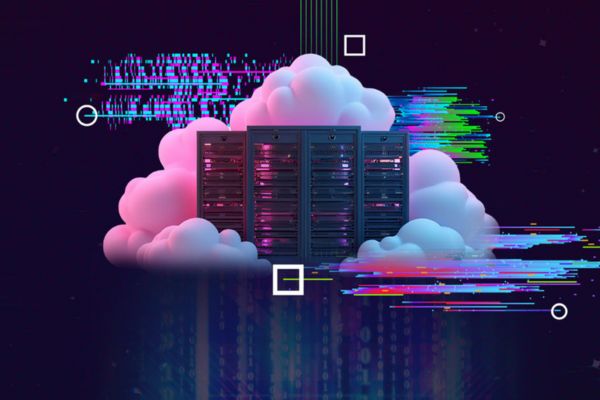
Today’s business environment is constantly changing and extremely competitive, which means that long-standing methods of working no longer provide businesses with enough help to be successful. With the increasing difficulty of predicting world markets, the idea of creating a “future-proof” business has changed from just an idea to an absolute requirement for all businesses if they want to stay afloat. The relationship between cloud infrastructure and artificial intelligence (AI) is central to this transformation and is mutually beneficial. However, the true potential of this duo remains untapped by many, hidden behind a focus on simple automation rather than the deep architectural pivots and “peripheral” strategies that are beginning to redefine market leaders. To truly grasp how these forces work together, one must first look at the digital ground upon which a business is built.
Establishing a Scalable Foundation through Cloud-Native Ecosystems
In order to transition into the state ready for the future, the process of abandoning traditional fixed and on-premise structures will need to take place. Imagine the cloud to be the important “central nervous system” of the company; it gives enough elasticity to cope with the amount of data necessary for modern apps, while saving time from the physical effort involved in handling hardware. With the adoption of cloud-native platforms, businesses can stop relying on the costly infrastructure approach and move on to using resources via the operational expenditure scheme, whereby everything used is done on a pay-as-you-go principle. As the technology of Agentic AI will emerge in 2026, it is even more necessary to switch from one tech solution to another. Leading companies are transitioning from just using data digitally to building cloud ecosystems, where data is used to improve its security and perform edge computing. These cloud-based environments will enable global teams to work together while having enough computing capacity to create custom AI solutions. It allows firms to abandon managing physical data centers and GPU accelerated computer clusters and focus instead on working with the “brain” of their organization.
Transforming Data into Actionable Intelligence
Whereas the cloud offers the physical capacity to grow, artificial intelligence offers the “brainpower” to maneuver through the complicated business landscape. Incorporation of AI into the core processes symbolizes a shift from reactive to proactive business practices. Forward-thinking companies have come to realize that AI is not an independent technology for improving individual processes; instead, they are incorporating it into their business processes. The “Embedded AI” technology enables companies to automate multiple steps involved in their operations with minimal supervision. The success of any AI-based initiative depends on the quality of data used. Young companies must be able to collect a lot of data for AI to become useful to them. Leaders who leverage advanced analytics on the structured and responsibly managed data might predict upcoming changes in the market even before they happen. This level of foresight is what distinguishes a resilient company from a productive one by helping it plan for future disruptions in its supply chain or consumer behaviors. However, technology represents only half of the challenge; the other crucial component is the people tasked with managing these systems.
Cultivating a Culture of Continuous Innovation and Resilience
For a business entity to be future-ready, there must exist perfect equilibrium between human assets and technology usage. The most successful companies understand that technology acts only as an accelerator to amplify the work of humans instead of replacing them altogether. With artificial intelligence agents starting to engage in mundane operations, workers shift to handling strategic planning, critical thinking, and governance of automated systems. One of the most commonly used ways to attain resilience in the new age of business involves using a concept referred to as “peripheral automation,” which entails extending an organization’s current core applications by using AI technologies without completely replacing existing systems. This process ensures that the firm does not face any risks associated with transitioning from one system to another while ensuring continuous operations. Through the creation of an environment that combines cloud-native stability with intelligent automation, firms will always be ready for the future.
Authored by – Vikram Jain, Practice Director – Data infrastructure at Advaiya Solutions Inc