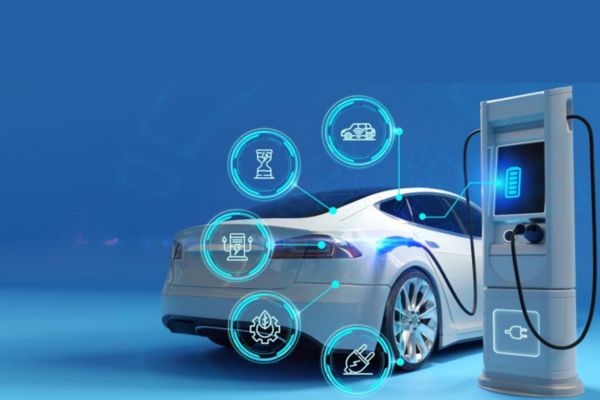
The global electric vehicle (EV) industry is entering a transformative growth phase, driven by ambitious decarbonization targets, substantial investments from automotive manufacturers, advancements in battery technologies, and the rapid expansion of charging infrastructure worldwide.
According to Precedence Research, the global electric vehicle market size was valued at USD 988.70 billion in 2025 and is projected to reach approximately USD 2.76 trillion by 2035, growing at a compound annual growth rate (CAGR) of 10.82% between 2026 and 2035.
The increasing shift toward sustainable transportation, coupled with favorable government policies and technological innovation, is reshaping the automotive landscape and positioning electric vehicles as a mainstream mobility solution across both developed and emerging economies.
Why Is the Electric Vehicle Industry Experiencing Unprecedented Growth?
The EV market has witnessed remarkable expansion due to growing environmental awareness, stringent emission regulations, and global commitments to achieve net-zero carbon emissions. Governments worldwide are introducing subsidies, tax incentives, and supportive regulatory frameworks that encourage consumers and businesses to transition from conventional internal combustion engine vehicles to electric alternatives.
Major automotive manufacturers continue to accelerate their electrification strategies. Companies such as Ford, Mercedes-Benz, Hyundai, Tata Motors, and BYD are investing billions of dollars into EV development, battery technologies, and manufacturing facilities. These investments are significantly enhancing vehicle performance, affordability, and accessibility for consumers.
In India, government initiatives such as the newly launched EV Policy 2025 in Madhya Pradesh are providing subsidies ranging from ₹5,000 to ₹10 lakh across vehicle categories, further boosting adoption rates and strengthening the country’s EV ecosystem.
How Is Artificial Intelligence Transforming Electric Vehicles?
Artificial Intelligence (AI) is emerging as a game-changing force in the electric vehicle industry. AI-powered systems are improving battery management, predictive maintenance, autonomous driving capabilities, and vehicle performance optimization.
Advanced AI algorithms help monitor battery health, maximize energy efficiency, and extend driving range. Intelligent infotainment systems provide personalized driving experiences, while AI-enabled predictive diagnostics help detect potential vehicle issues before they become critical.
The growing integration of AI with vehicle-to-everything (V2X) communication and smart charging infrastructure is also creating new opportunities for connected and autonomous electric mobility, enhancing both convenience and safety for drivers.
Government Support Remains a Key Market Catalyst
Government incentives continue to play a crucial role in accelerating EV adoption globally. Financial benefits such as tax rebates, purchase subsidies, reduced registration fees, and preferential road access are making electric vehicles increasingly attractive to consumers.
At the same time, stricter emission standards and climate policies are encouraging automakers to expand their electric portfolios. Rising concerns over air pollution and fossil fuel dependency are further supporting the transition toward cleaner transportation alternatives.
The rapid development of charging infrastructure is another major contributor to market growth. Countries across North America, Europe, and Asia-Pacific are investing heavily in public and private charging networks to address range anxiety and improve user convenience.
Vehicle-to-Grid Technology Creating New Opportunities
Vehicle-to-Grid (V2G) technology is gaining significant attention as a promising innovation within the EV ecosystem. This technology enables electric vehicles to supply electricity back to the power grid during periods of high demand, creating additional value for vehicle owners while enhancing grid stability.
V2G solutions support renewable energy integration, optimize electricity distribution, and improve overall energy efficiency. As smart grid infrastructure expands globally, V2G is expected to become an important component of future energy and transportation systems.
Battery Electric Vehicles Lead the Market
Among propulsion types, Battery Electric Vehicles (BEVs) dominated the global market in 2025, accounting for more than 67.7% of total revenue. Their strong market position is driven by growing environmental awareness, zero tailpipe emissions, and ongoing improvements in battery performance and charging capabilities.
Meanwhile, Fuel Cell Electric Vehicles (FCEVs) are anticipated to register substantial growth during the forecast period. Increasing investments in hydrogen infrastructure and fuel-cell technology, along with stricter carbon reduction goals, are expected to accelerate adoption in commercial transportation and heavy-duty vehicle segments.
Passenger Cars Continue to Dominate Demand
The passenger car segment represented the largest share of the electric vehicle market in 2025. Rising consumer demand for compact, affordable, and environmentally friendly transportation options continues to support segment growth.
Government incentives and technological advancements are making electric passenger vehicles more practical and appealing to a broader consumer base.
At the same time, electric trucks are emerging as one of the fastest-growing segments. Logistics providers and transportation companies are increasingly adopting electric trucks to reduce operational costs and meet sustainability objectives, particularly in urban delivery operations.
Asia Pacific Maintains Global Leadership
Asia Pacific remained the dominant regional market in 2025, accounting for approximately 49% of global revenue. The region generated nearly USD 491.90 billion in market value and is projected to reach approximately USD 1,515.22 billion by 2035, growing at a CAGR of 11.91%.
China continues to lead global EV adoption through extensive government support, robust charging infrastructure development, and strong domestic manufacturing capabilities. Industry leaders such as BYD and CATL have significantly expanded their global presence through continuous innovation and large-scale production.
India is also emerging as a major EV growth hub, supported by initiatives such as FAME II, Make in India, and increasing investments in domestic battery manufacturing and charging infrastructure. Japan’s strong battery production ecosystem and supportive government policies further contribute to regional growth.
North America and Europe Accelerate Market Expansion
North America is expected to witness the fastest growth during the forecast period, fueled by technological innovation, increased competition, and significant investments in charging infrastructure.
Organizations such as Veloz and Electrify America continue to promote EV adoption across the United States, while automakers invest heavily in expanding electric vehicle production and improving battery technologies.
In Europe, stringent emission regulations and ambitious climate targets are driving widespread EV adoption. Countries such as Norway, the United Kingdom, and Germany are leading the region’s transition toward zero-emission transportation through supportive policies, investments, and consumer incentives.
Industry Investments Signal Strong Future Growth
The electric vehicle industry continues to attract substantial investments from governments and private companies alike.
In July 2025, the UK government announced a £63 million investment package to strengthen EV charging infrastructure, including the deployment of 100,000 charging points nationwide.
Tata Motors revealed plans to invest up to USD 4 billion in electric vehicles over the next five years, while Mahindra committed approximately ₹4,500 crore toward expanding EV production capacity and launching new electric models.
These investments underscore growing confidence in the long-term potential of electric mobility and are expected to accelerate innovation, manufacturing expansion, and market penetration worldwide.
Future Outlook
The global electric vehicle market is poised for sustained expansion over the next decade as governments, automakers, technology providers, and energy companies work together to create a cleaner and more sustainable transportation ecosystem.
With AI-driven innovation, next-generation battery technologies, expanding charging infrastructure, and supportive government policies continuing to strengthen the industry, electric vehicles are expected to become the preferred mobility solution for consumers and businesses alike.
As global EV sales continue to break records and industry investments reach unprecedented levels, the electric vehicle market is positioned to play a central role in shaping the future of transportation and achieving worldwide sustainability goals