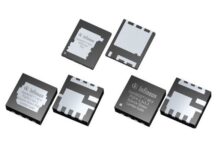



Texas Instruments announced two new devices designed to enable seamless interoperability across increasingly complex factory automation, robotics and Industrial Internet of Things systems. A multiprotocol communications system-on-module (SoM) and IO-Link master expand TI’s industrial communication portfolio, which includes software-programmable hardware and certified, production-ready software stacks that enable engineers to run any established protocol on one integrated platform.
“Industrial communication is evolving faster than ever, and engineers need a partner who can help them adapt to emerging standards and requirements,” said Karim Jamal, director of Industrial Communications Solutions at TI. “TI brings together certified hardware, software and in-house engineering expertise, supporting customers as they develop next-generation industrial automation systems that work together seamlessly across devices, networks and communication protocols.”
“At SICK, we rely on robust and future-ready communication technologies to connect sensors, machines, and systems. TI’s Industrial Ethernet and IO-Link solutions help us bring products such as the SIG300 to market with the performance and reliability required for modern industrial automation,” said Dr. Stefan Odermatt, senior vice president of research and development, integrated automation at SICK.
Achieve seamless multiprotocol integration
Built on TI’s AM2612 microcontroller (MCU) and DP83826AI Ethernet physical layer, the TICS100MOD is the industry’s smallest fully featured, certified communications SoM that supports multiple real-time Ethernet protocols on a single piece of hardware. The SoM allows engineers to switch between EtherCAT, EtherNet/IP and Profinet during boot time through a simple firmware update, future-proofing their designs as protocols evolve and making Industrial Ethernet integration easier and more cost effective. The TICS100MOD SoM integrates two Arm® Cortex®-R5F cores and external memory, providing enough compute performance to support fully featured protocol stacks and advanced factory automation applications in an optimized system footprint.
The TIOM2212 dual-channel IO-Link master bridges TI’s upstream multiprotocol approach to the sensor and actuator level with IO-Link connectivity, enabling engineers to connect IO-Link devices to higher-level Industrial Ethernet networks through a single platform. With advanced analog integration and built-in protection features, the TIOM2212 ensures fast, reliable data exchange between field devices. Compatible with TI’s Sitara industrial networking system-on-chip (SoC) family and AM13Ex real-time MCUs through an integrated frame handler, the TIOM2212 reduces the design complexity and costs of bridging field devices and factory control systems.
Accelerate innovation in connected factories
Connected factories require multiple industrial communications protocols to exchange data between diverse equipment on the production floor. Supporting multiprotocol networks typically requires separate hardware for each protocol – increasing cost, design complexity and time. Sourcing both hardware and software from a single vendor can simplify integration and customization, reduce supply-chain risk, and streamline long-term platform maintenance.
TI’s multiprotocol portfolio enables engineers to address these design challenges in several ways:
- Protocol flexibility: Firmware-based switching and customization helps meet changing customer or regional requirements without hardware redesign.
- Deterministic communication: Simultaneous real-time performance across multiple protocols, with industry-leading process data cycle times on TI MCUs and processors.
- Software configurability: Full media access control layer access enables highly customized protocol implementations across the stack.
- Streamlined development: Evaluation modules and a software development kit (SDK) with certified, production-ready protocol stacks, application examples, training resources, and development and troubleshooting tools accelerate time to market.
For more information, read the application brief, “Accelerating Industrial Connectivity: Simplifying Multiprotocol Ethernet Integration with TICS100MOD.”
Enable a future-ready industrial networking ecosystem with TI technology
Central to TI’s single-chip, multiprotocol approach is the programmable real-time unit and industrial communication subsystem (PRU-ICSS). This proprietary hardware block is integrated into TI MCUs and SoCs to handle deterministic, low-latency industrial communication protocols. By offloading real-time communication to these dedicated cores, the general-purpose Arm CPUs are freed to manage other critical functions, improving overall system performance.
TI’s broader portfolio for industrial communications includes scalable SoCs with an integrated PRU-ICSS, real-time MCUs, protocol-compliant interface devices and an industrial communication SDK. With the addition of the TIOM2212, TI now provides every hardware layer in the IO-Link ecosystem, spanning transceivers, digital output switches and a master device with an integrated frame handler. These solutions are designed, optimized and supported in-house, positioning TI as the partner of choice for networking engineers.
TI at electronica 2026
TI will display its multiprotocol industrial communications technology at electronica, Nov. 10-13, in Munich, Germany. The new TICS100MOD SoM will be featured at TI’s exhibit in Hall C4, booth 159, in two demonstrations:
- TICS100MOD multiprotocol Industrial Ethernet: Reduce complexity and speed up time-to-market by seamlessly integrating multiprotocol industrial Ethernet into any system with TI’s certified, production-ready module.
- New industrial communication technologies and trends: Create a seamless, future-ready industrial networking ecosystem by leveraging the latest Ethernet and IO-Link protocols, integrated neural processing units and time-sensitive networking.
Availability
Preproduction quantities of the TIOM2212 IO-Link master device are available now on TI.com, with the TICS100MOD SoM available by year-end 2026. Development resources are also available, including the: