
India’s digital transformation has created enormous opportunities for businesses, consumers, and public services. Digital payments, cloud platforms, connected devices, online healthcare, and software-driven businesses are now part of everyday life. As more activities move online, protecting data, infrastructure, and digital identities has become essential.
Cybersecurity is no longer limited to antivirus software or a firewall. Organisations must protect applications, networks, cloud services, employee accounts, connected devices, and sensitive information. This demand is creating opportunities for Indian cybersecurity startups to develop practical security solutions for businesses of different sizes.
Why Cybersecurity Is Becoming a Business Priority
India’s cybersecurity product ecosystem is expanding alongside its digital economy. The Data Security Council of India’s Indian Cybersecurity Product Landscape Report 3.0 reported more than 400 cybersecurity product companies and approximately US$4.46 billion in industry revenue in 2025. The report recorded a 34% compound annual growth rate between 2020 and 2025.
Enterprise investment is growing too. Gartner forecast Indian end-user spending on information security to reach US$3.435 billion in 2026, an increase of 11.7% over 2025. CERT-In recorded 29,44,248 cybersecurity incidents during 2025. These are reported incidents, not necessarily confirmed successful breaches, but they demonstrate the scale of the monitoring and response challenge.
For startups, this creates opportunities in cloud security, identity protection, application security, fraud detection, IoT protection, and AI-assisted threat monitoring. Market growth alone does not guarantee success: products must perform reliably, protect sensitive data, integrate with existing systems, and earn customer trust.
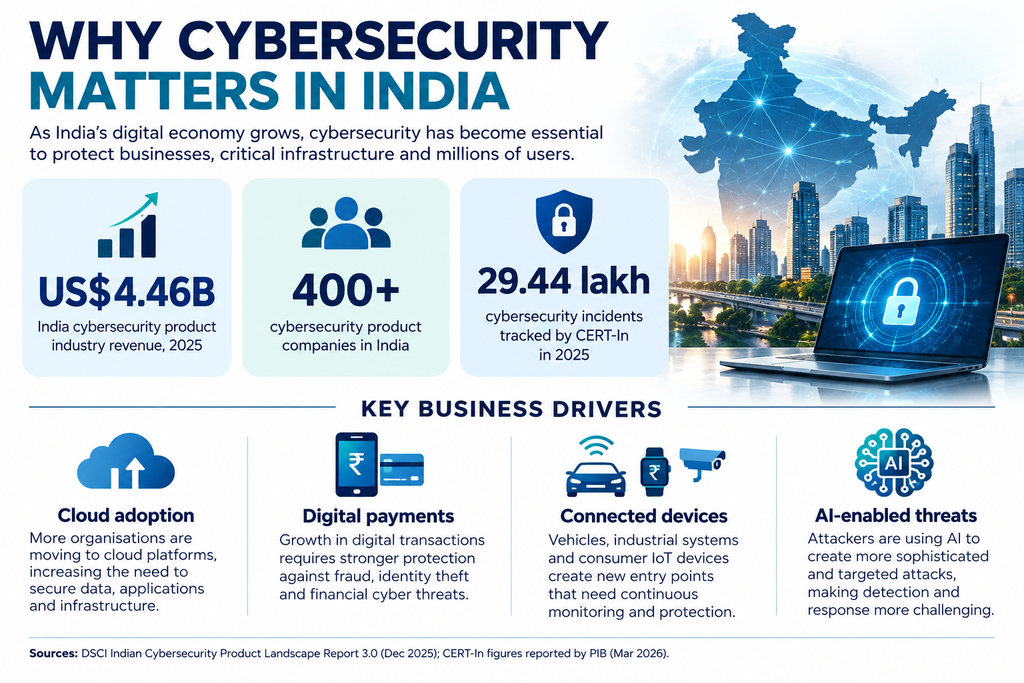
Figure 1. Why cybersecurity matters in India. Original infographic created for this article.
The Threats Are Changing, and So Is the Response
Traditional security systems were largely designed to protect clearly defined network boundaries. Today’s businesses operate across cloud infrastructure, remote workplaces, mobile applications, third-party platforms, and connected devices. Attackers exploit phishing, stolen credentials, ransomware, vulnerable software, exposed APIs, and poorly configured cloud services.
The opportunity for startups lies in solving specific problems effectively. One company may focus on detecting fraudulent transactions, another on identifying exposed cloud resources, and another on helping businesses respond to incidents faster. Specialised products can be more useful than broad platforms that promise to solve every problem.
Homegrown Innovation Beyond Traditional Security
Indian cybersecurity startups are developing solutions across cloud security, identity and access management, application and API security, and operational technology. Cloud tools can identify risky permissions and exposed services. Identity solutions can detect unusual logins and enforce stronger authentication. Application security products can help teams find vulnerable endpoints before attackers exploit them.
Operational technology and the Internet of Things present another opportunity. Manufacturing facilities, energy systems, industrial equipment, and connected devices often have different reliability and availability requirements from ordinary office IT. Protecting them requires an understanding of both cybersecurity and the physical processes being controlled.
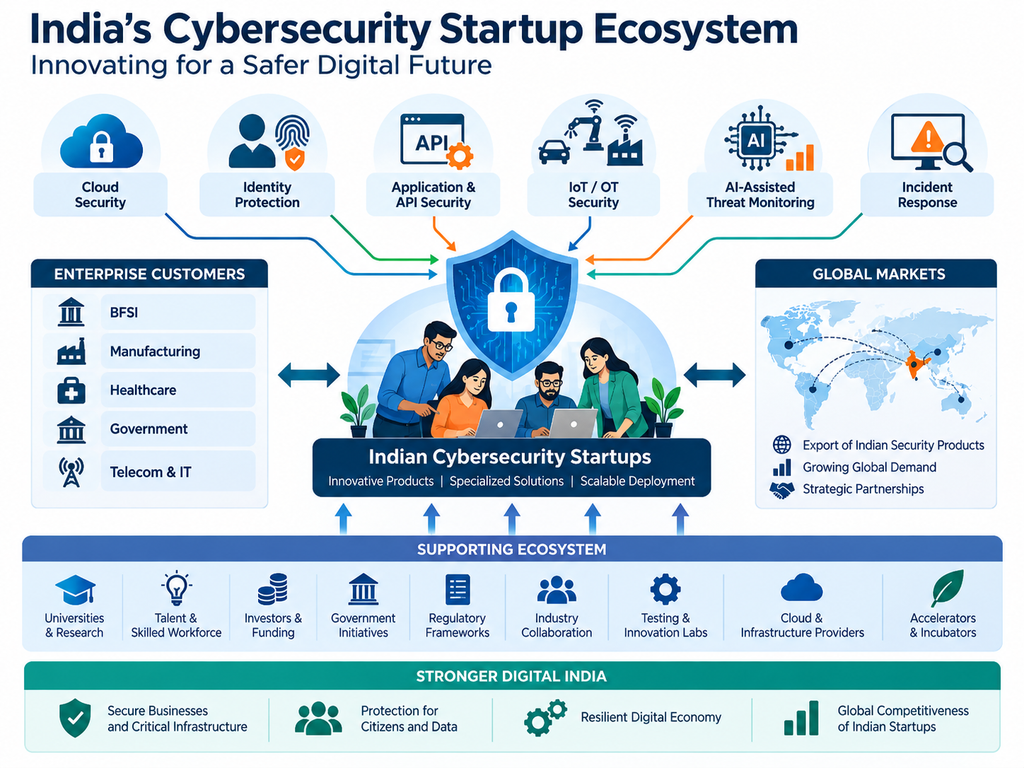
Figure 2. India’s cybersecurity startup ecosystem. Original infographic created for this article.
Artificial Intelligence: A Powerful but Difficult Ally
AI can help security teams examine large volumes of logs, identify unusual behaviour, classify suspicious messages, and prioritise alerts. Automated analysis may make advanced capabilities more accessible to organisations with small security teams and reduce repetitive work for analysts.
AI is not a complete security solution. Poor-quality data can produce misleading results, while excessive alerts can overwhelm teams. Attackers can also use AI to create convincing phishing messages and adapt their techniques. Startups must show that their products improve detection, reduce unnecessary alerts, and support sound human decisions—not simply add an AI label to an existing tool.
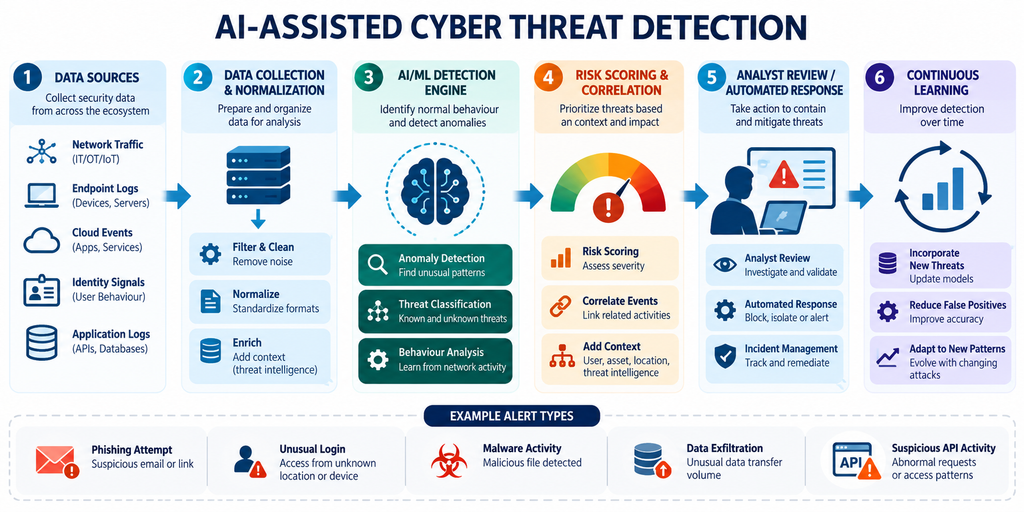
Figure 3. AI-assisted cyber threat detection workflow. Original infographic created for this article.
Why Building a Cybersecurity Startup Is Different
A cybersecurity startup must convince customers that its product can protect real systems without creating additional risks. Because security tools may access sensitive logs, configurations, identities, or business data, customers need confidence in how the product handles information and how securely it is developed.
Integration is another challenge. Enterprises may already use several security platforms, so a new solution must fit existing workflows and demonstrate measurable value. Startups also face long sales cycles, limited budgets, competition from established vendors, and a shortage of experienced security professionals. Focused pilot projects, independent testing, responsive support, and clear results can help build credibility.
Collaboration Can Accelerate Adoption
India’s cybersecurity ecosystem benefits when startups work with established technology companies, academic institutions, industry users, and government organisations. Universities and research laboratories can contribute expertise in vulnerability research, secure software, cryptography, embedded-system security, and AI-based detection. Startups can translate useful research into products for specific operational needs.
Enterprise pilot programmes provide a practical way to test products under realistic conditions. Access to mentors, testing environments, funding, and customers can help promising companies move beyond prototypes. Clear rules for data access and responsible vulnerability disclosure remain essential during these collaborations.
Building Trust in India’s Digital Future
The next stage of cybersecurity innovation will involve stronger protection for cloud infrastructure, digital identities, software supply chains, APIs, connected devices, and AI-driven applications. Indian startups have an opportunity to meet these needs with products shaped by practical customer requirements and capable of scaling across markets.
Their success will depend on technical quality, customer trust, effective implementation, and measurable security improvements. Cybersecurity innovation is not about building the largest number of tools; it is about helping organisations prevent avoidable incidents, identify threats earlier, limit disruption, and recover more effectively.
India’s cybersecurity startups have an important role to play in making digital growth more secure. The strongest innovations will turn complex security challenges into dependable protection that businesses can understand, deploy, and trust.
Data note: Market figures are attributed to DSCI’s Indian Cybersecurity Product Landscape Report 3.0 and Gartner’s 2026 India information-security spending forecast. CERT-In incident counts are reported incidents, not necessarily confirmed breaches. Revenue, spending forecasts, and incident counts measure different things.