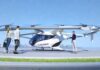
The global eCTOL aircraft market size reached USD 2.61 billion in 2024 and is projected to be worth around USD 127.26 billion by 2034, with a remarkable CAGR of 47.50% from 2025 to 2034, driven by aggressive electrification goals, public-private investment, and unmet demand for low-emission regional aviation. North America remains the current leader, while Asia-Pacific is quickly gaining momentum due to dense populations and weak intercity infrastructure. As airlines, governments, and cargo operators seek cleaner and more cost-effective alternatives, eCTOLs are moving from early pilots to strategic assets.

Electric Runways: Why eCTOLs Are the Next Big Leap in Aviation
Electric Runways: Why eCTOLs Are the Next Big Leap in Aviation
Electric Conventional Takeoff and Landing (eCTOL) aircraft are emerging as a key solution in the push for greener aviation. Unlike their vertical lift counterparts (eVTOLs), eCTOLs operate from conventional runways, leveraging existing infrastructure to reduce entry barriers. Their electric propulsion systems drastically lower emissions and noise, while offering simpler maintenance and faster scalability. For decision-makers in aviation, logistics, and regional mobility, eCTOLs represent a rare convergence of technological maturity, regulatory support, and market demand, all pointing to rapid deployment across short-haul and mid-range routes.
Why North America Dominates the eCTOL Aircraft Market
The U.S. eCTOL aircraft market size was valued at USD 0.77 billion in 2024 and is predicted to reach around USD 38.29 billion by 2034, at a CAGR of 47.79% from 2025 to 2034

One of the most significant contributors to North America’s dominance in the eCTOL market is the robust support from federal regulatory bodies. The Federal Aviation Administration (FAA) has taken proactive steps to streamline the integration of eCTOL aircraft into the national airspace. Through its Advanced Air Mobility (AAM) Integration Office, the FAA is working on policies and frameworks that accommodate the unique characteristics of electric aircraft. Additionally, NASA’s Advanced Air Mobility National Campaign is supporting the industry by providing advanced test environments and operational scenarios to validate flight safety and efficiency. These efforts aim to certify several eCTOL aircraft models by 2028, aligning with broader U.S. Department of Transportation goals focused on sustainable and connected urban mobility. This regulatory clarity and support make the U.S. a hotbed for eCTOL innovation and deployment.
North America is home to some of the world’s most well-funded and technologically advanced eCTOL manufacturers. Companies like Joby Aviation, Beta Technologies, Wisk Aero, and Archer Aviation are spearheading the development of next-generation electric aircraft. These companies have attracted billions of dollars in venture capital, strategic investments, and public market funding. For example, Joby Aviation has received over $2 billion in total funding, including $131 million in contracts from government agencies. The region’s highly active venture capital landscape and interest from established corporations like Toyota and United Airlines have created a fertile ground for growth and innovation in the eCTOL space. These private-sector leaders not only manufacture aircraft but also work closely with local governments to test and implement Urban Air Mobility (UAM) solutions.
North America, particularly the United States, views eCTOL aircraft as valuable not just for commercial urban air mobility but also for military and logistics purposes. The U.S. Air Force, through its Agility Prime program, is investing in eCTOL platforms for tactical logistics, disaster response, and troop transport. Companies like Beta Technologies have already secured contracts with the U.S. Department of Defense to develop electric aircraft tailored for military use. Additionally, large logistics companies such as UPS are collaborating with eCTOL developers to explore cargo transportation solutions for last-mile delivery and remote access. The U.S. military budget for AAM-related technology exceeded $1 billion in FY2023, demonstrating serious commitment to advancing eCTOL adoption.
Why Asia Pacific is the Fastest-Growing eCTOL Aircraft Market
Asia Pacific is home to some of the most densely populated and congested urban regions in the world, such as Tokyo, Shanghai, Mumbai, Seoul, and Jakarta. These megacities face growing challenges related to traffic congestion, limited urban land, and rising emissions. In response, governments and technology firms are turning to eCTOL aircraft as a sustainable solution for short-range air mobility. The region’s high concentration of urban clusters creates a compelling use case for eCTOL, particularly for connecting business districts, airports, and high-traffic corridors without relying on ground infrastructure.
Governments across Asia Pacific are playing a pivotal role in accelerating eCTOL adoption through targeted policy, infrastructure investment, and regulatory modernization. In China, the Civil Aviation Administration of China (CAAC) is pioneering airworthiness standards for autonomous aerial vehicles, with companies like EHang receiving green lights for public flight trials. Japan’s Ministry of Economy, Trade and Industry (METI) has designated air mobility as a strategic pillar, aiming for full eCTOL deployment by 2025 during the Osaka Expo, backed by over ¥30 billion (~$210 million USD) in government funding. Similarly, South Korea’s Urban Air Mobility (UAM) Roadmap lays out a plan to operationalize air taxi networks by 2025, including testing in cities like Seoul and Incheon. India, though in earlier stages, is also taking concrete steps with its Digital Sky initiative and liberalized drone regulations, setting the stage for future eCTOL integration.
Asia Pacific has birthed several notable eCTOL and eVTOL pioneers that are drawing global attention. EHang (China) has logged more than 30,000 autonomous test flights in over 10 countries, showcasing its readiness for commercial operations. SkyDrive (Japan), backed by Toyota and Suzuki, is developing two-seater eCTOL aircraft for urban taxi services by 2025. Meanwhile, South Korean giants like Hyundai Motor Group, Hanwha, and Korean Air are actively building integrated air mobility ecosystems, including airframes, batteries, and traffic management systems. This robust regional innovation ecosystem is fueling both technological advancement and accelerated adoption, propelling the market forward faster than other regions.
Asia Pacific eCTOL Market Growth Factors
| Growth Driver | Details |
| Urbanization & Congestion | 8 of top 10 global megacities in Asia; critical need for urban air mobility |
| Government Support | CAAC (China), METI (Japan), UAM Roadmap (Korea), Digital Sky (India) |
| Major Events | 2025 Osaka Expo, Hangzhou Asian Games (2022) for live demos |
| Funding & Incentives | ¥30B+ ($210M) Japan UAM R&D; Chinese city-level subsidies |
| Local Champions | EHang, SkyDrive, Hyundai, Hanwha, Korean Air |
| Flight Tests | 30,000+ eCTOL/eVTOL tests completed by EHang |
| Infrastructure Plans | Korea: 30+ vertiports, airport UAM terminals by 2030 |
| Battery Supply Chain | China supplies 75% of global lithium-ion cells |
| Smart City Integration | 5G, AI, and IoT-based low-altitude management systems |
Ground Control: Why Infrastructure Is the Key to eCTOL Success
Aircraft are only part of the solution. For eCTOLs to succeed, airports and municipalities must invest in supporting infrastructure. These aircraft require megawatt-class chargers and robust grid access, often demanding energy storage solutions or renewable microgrids. Several regional airports in the U.S., Japan, and Norway are setting the precedent by installing smart charging stations and modular terminals. The shift from fossil fuels to electricity also brings new regulatory challenges, such as utility coordination, grid reliability, and space reallocation, all of which open doors for new ecosystem players.
Business Beyond the Aircraft: The Rise of Electrified Aviation Ecosystems
OEMs and service providers are moving beyond aircraft sales to offer end-to-end solutions. Subscription models now bundle aircraft leasing with predictive maintenance, real-time analytics, and even carbon credit tracking. Aircraft-as-a-Service (AaaS) offerings are reshaping how fleet operators think about capital investment. Meanwhile, infrastructure partners, software vendors, and insurers are forming tight alliances to support eCTOL deployment at scale. The B2B opportunities here are enormous, not only for aerospace companies, but for energy, mobility, and technology players seeking to enter the electrified aviation value chain.
Winners in the Air: Who’s Defining the eCTOL Competitive Landscape?
The eCTOL space is competitive, but early movers are starting to separate from the rest. Joby Aviation, Lilium, Beta Technologies, and Vertical Aerospace are advancing fast with robust prototypes and early certification progress. Pipistrel, acquired by Textron, is leveraging years of electric flight experience. These companies are backed by billions in venture funding and are increasingly forming alliances with airport operators, battery manufacturers, and data analytics firms. Strategic mergers, acquisitions, and co-development deals will define who dominates this fast-evolving landscape
Recent Update & Real-World Data
- Electra EL9:
- Nine-seat hybrid eSTOL with ~330 nm passenger range and 1,100 nm ferry range, cruise speed ~200 mph, and ultra-short takeoff in ~150 ft thanks to blown-lift tech.
- Certification aimed for 2028, service entry by 2029 under FAA Part 23.
- Electra EL-2 “Goldfinch”:
- Two-seat demonstrator with hybrid-electric turbogenerator plus eight electric motors, achieved 150 ft takeoff and 114 ft landing, with noise at 55 dB.
- Flight reached 3,200 ft altitude over ~30 miles in Nov 2023.
- Odys Alta (eCTOL Concept):
- A nine-passenger hybrid-electric design using a box-wing with 16 propellers, targeting 650 nm total range and 170 nm electric-only, with stealthy noise profile.
eCTOL Aircraft Market Top Key Players
- Joby Aviation
- Vertical Aerospace
- Lilium GmbH
- Eve Urban Air Mobility
- Pipistrel
- AeroMobil
- Beta Technologies
- Kitty Hawk
- Archer Aviation
- Ampaire
- Urban Aeronautics
- Volocopter
- EmbraerX
- Zunum Aero
- Wisk Aero