


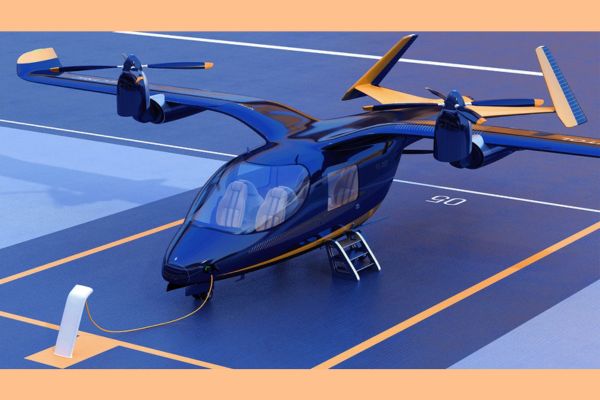
The global electric vertical takeoff and landing (eVTOL) aircraft market is moving from a technology-development phase toward commercial aviation, with increasing investment in electric propulsion, advanced batteries, autonomous flight systems, vertiport infrastructure, and urban air mobility networks.
According to Cervicorn Consulting, the global eVTOL aircraft market was valued at approximately USD 2.8 billion in 2025 and is projected to exceed USD 51.21 billion by 2035, expanding at a 37% CAGR between 2026 and 2035. The rapid expansion reflects growing interest in air taxis, cargo transportation, emergency services, defense applications, and other advanced air mobility solutions.
eVTOL aircraft are designed to take off, hover, and land vertically using electric propulsion systems. Unlike conventional aircraft, these vehicles do not require traditional runways, creating opportunities for point-to-point transportation within and around densely populated urban areas.
eVTOL Aircraft: From Prototypes to Commercial Aviation
The eVTOL industry has progressed significantly from early prototypes and concept aircraft toward flight testing, certification, infrastructure planning, and initial commercial deployment.
More than 500 eVTOL companies globally are involved in aircraft design, testing, or certification programs, highlighting the scale of investment and technological development taking place across the industry.
The emergence of eVTOL aircraft is closely connected to the broader Advanced Air Mobility (AAM) ecosystem. Air taxi operators, aerospace manufacturers, technology companies, infrastructure developers, airports, and government agencies are increasingly working together to establish the systems required for commercial operations.
The industry is also moving beyond passenger transportation. Cargo delivery, emergency response, medical logistics, defense, tourism, and specialized transportation are emerging as important application areas.
Market Growth Driven by Urban Congestion and Demand for Faster Mobility
Increasing congestion in major metropolitan areas is one of the strongest drivers of the eVTOL market.
As urban populations expand, conventional road transportation faces increasing pressure from traffic congestion, longer commuting times, and infrastructure limitations. eVTOL aircraft could provide a new transportation layer by using low-altitude airspace for faster point-to-point travel.
Air taxi services could connect airports, city centers, business districts, suburban areas, and other high-demand locations without relying entirely on road infrastructure.
The development of dedicated vertiports is therefore becoming an important component of the emerging eVTOL ecosystem.
Electric Propulsion and Battery Technology Accelerate Market Development
Advancements in battery technology, electric motors, power electronics, lightweight materials, and aircraft design are improving the feasibility of electric aviation.
According to Cervicorn Consulting, the fully electric propulsion segment accounted for 61% of the eVTOL market in 2025, making it the leading propulsion category.
Electric propulsion can provide several potential advantages, including lower operating emissions, reduced mechanical complexity, and potentially lower maintenance requirements compared with conventional propulsion systems.
However, battery energy density remains a critical factor. Improvements in battery performance will directly influence aircraft range, payload capacity, charging requirements, operating economics, and commercial viability.
Infrastructure Becomes a Critical Part of the eVTOL Ecosystem
Aircraft development represents only one part of the emerging eVTOL market.
Commercial operations will also require an ecosystem of vertiports, charging infrastructure, air traffic management systems, digital flight coordination platforms, maintenance facilities, passenger terminals, and regulatory frameworks.
Cervicorn Consulting estimates that approximately 90–100 vertiport locations worldwide are at operating, construction, or planned stages. North America currently leads infrastructure development with more than 30 locations, followed by Asia-Pacific with approximately 25–30 and Europe with around 15–20.
This infrastructure build-out is expected to accelerate as aircraft certification progresses and operators move toward commercial passenger and cargo services.
Artificial Intelligence Could Transform eVTOL Operations
Artificial intelligence is becoming increasingly important across the eVTOL ecosystem.
AI can support autonomous navigation, route optimization, obstacle detection, predictive maintenance, battery management, airspace coordination, and real-time operational decision-making.
Autonomous and semi-autonomous flight technologies could eventually reduce pilot workload and improve operational efficiency. However, fully autonomous passenger operations will require extensive testing, certification, safety validation, and regulatory approval.
For the near term, piloted and semi-autonomous operations are expected to remain important as regulators and operators establish safety standards and operational frameworks.
North America Leads the Global eVTOL Market
- North America currently represents the largest regional market for eVTOL aircraft.
- Cervicorn Consulting estimates that North America accounted for 43.2% of global eVTOL market revenue in 2025. The region benefits from a mature aerospace ecosystem, strong investment activity, advanced technology capabilities, and ongoing regulatory development.
- The North American eVTOL market is projected to reach approximately USD 22.02 billion by 2035, rising from USD 1.20 billion in 2025 at a CAGR of 38.2%.
- The United States remains particularly important, with aerospace companies, startups, technology providers, and government agencies working on aircraft development, certification, demonstration programs, and advanced air mobility infrastructure.
Asia-Pacific Emerges as a High-Growth Market
- Asia-Pacific is expected to become one of the fastest-growing regional markets for eVTOL aircraft.
- The regional market was valued at approximately USD 0.56 billion in 2025 and is projected to reach around USD 10.24 billion by 2035, expanding at a 42.7% CAGR.
- Rapid urbanization, high population density, smart-city initiatives, growing transportation demand, and government interest in next-generation mobility are supporting the development of eVTOL applications across the region.
- China, Japan, South Korea, India, and other Asian markets are exploring applications ranging from passenger transportation and air taxis to cargo logistics and emergency response.
India Could Become an Important eVTOL Opportunity
- India presents an emerging opportunity for eVTOL and advanced air mobility technologies because of its rapidly expanding cities, transportation challenges, growing aviation ecosystem, and increasing interest in electric mobility.
- Potential applications include airport-to-city transportation, premium urban mobility, medical transportation, emergency response, tourism, and cargo logistics.
- The development of an appropriate regulatory framework, charging infrastructure, vertiports, air traffic management systems, and public acceptance will be important for the long-term commercialization of eVTOL aircraft in India.
Key Challenges Could Slow Commercial Adoption
Despite strong market potential, the eVTOL industry faces several challenges.
- Aircraft Certification: eVTOL aircraft must meet stringent aviation safety and certification requirements. The certification process requires extensive flight testing, system validation, safety analysis, and regulatory compliance.
- Battery Limitations: Battery energy density remains one of the most important technological constraints. Increasing aircraft range while maintaining payload capacity and safety will require continued advances in energy-storage technologies.
- High Development Costs: Developing an aircraft that meets aviation safety standards requires substantial investment in engineering, testing, certification, manufacturing, and infrastructure.
- Air Traffic Integration: Large-scale urban eVTOL operations will require effective integration with existing aviation systems. Airspace management, flight corridors, communication systems, and digital traffic coordination will become increasingly important.
- Public Acceptance: Commercial success will ultimately depend on public confidence. Safety, noise, affordability, reliability, and convenience will influence whether consumers adopt eVTOL services as an alternative to conventional transportation.
eVTOL Market Opportunities Extend Beyond Air Taxis
While air taxis receive significant attention, the commercial opportunity extends well beyond passenger transportation.
Potential applications include:
- Passenger transportation and urban air taxis
- Airport shuttle services
- Cargo and last-mile delivery
- Emergency medical transportation
- Disaster response and search and rescue
- Military and defense operations
- Tourism and recreational flights
- Remote-area transportation
- Industrial and infrastructure inspection
Cargo and emergency applications could become particularly attractive because they may not require the same passenger infrastructure and operating models as mass-market air taxi services.
Competitive Landscape
- The global eVTOL ecosystem includes aerospace manufacturers, electric aviation startups, technology companies, propulsion developers, battery manufacturers, infrastructure providers, and mobility operators.
- Companies including Archer Aviation, Joby Aviation, EHang, Vertical Aerospace, Eve Air Mobility, Beta Technologies, Wisk Aero, and other emerging players are developing different aircraft architectures and commercialization strategies.
- The competitive landscape is increasingly shifting toward certification readiness, manufacturing scalability, aircraft performance, operational economics, infrastructure partnerships, and access to commercial markets.
What the Next Decade Could Look Like
The next phase of the eVTOL industry will likely be defined by a transition from prototype development to certification and commercial operations.
Successful companies will need to demonstrate not only that their aircraft can fly, but also that they can be manufactured at scale, operated safely, maintained efficiently, and integrated into existing transportation and aviation systems.
The development of vertiports and charging networks will progress alongside aircraft certification, while AI and autonomous technologies are expected to become increasingly important to future operations.
As governments, aerospace companies, technology providers, investors, and transportation operators continue to collaborate, eVTOL aircraft could become an important component of next-generation urban and regional transportation.
Conclusion
The global eVTOL aircraft market is moving toward a significant commercialization opportunity. Valued at USD 2.8 billion in 2025, the market is projected to exceed USD 51.21 billion by 2035, growing at a 37% CAGR from 2026 to 2035.
The combination of electric propulsion, advanced batteries, artificial intelligence, autonomous flight technologies, and new aviation infrastructure is creating the foundation for a new generation of air mobility.
While certification, battery performance, infrastructure costs, airspace integration, and public acceptance remain important challenges, continued technological development and investment could accelerate the transition of eVTOL aircraft from prototypes to commercially viable transportation solutions.