
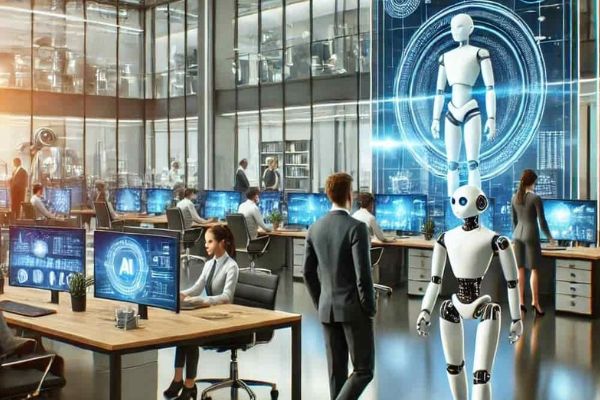
The big question facing organizations today is no longer whether AI will replace jobs, but whether employees are ready to work alongside it. While leaders focus on productivity, automation and the boardrooms debate business growth & transformation, employees are asking a more personal question: Will I remain relevant in an AI-driven world? This tension between technological promise and human uncertainty has created what we call AI anxiety.
Organizations must look beyond introducing new technologies or managing the fear of job losses. The real opportunity is to help employees understand, use and work confidently with AI. This means moving from AI anxiety to AI agency, a paradigm shift from fear about what AI might do to our jobs to learn how we can use it to do better work, make better decisions and create greater value.
The fundamental workforce challenge is no longer just how to introduce AI into an organization, but to prepare people to work with intelligent systems. This requires looking beyond technology training and considering changes in mindset, skills, jobs, leadership, organizational culture and business models.
From fear to confidence
At the employee level, the first step is to address the fear and uncertainty around AI and its impact on jobs. Employees need to understand how AI may change their roles, responsibilities and future career opportunities. Organizations must create opportunities for them to explore and experiment with AI through practical use, helping them build confidence over time. The aim is to shift the mindset from “AI will replace me” to “AI can make me more capable, productive and valuable.”
From technical knowledge to human – AI collaboration
Building a workforce ready for intelligent systems means going beyond technical training and helping employees learn how to work effectively with AI. This learning should reach everyone, not just technology teams, so that employees know how to use AI tools, ask the right questions, understand the results and check their accuracy. At the same time, organizations must develop human skills such as critical thinking, creativity, good judgment, empathy and problem-solving. The real advantage will come from combining AI capabilities with people’s knowledge and experience to make better decisions and deliver better business results.
Redesigning how work gets done
The real business impact of AI will be in bringing about a fundamental change in how work gets done and value is created. Organizations must identify where AI can automate tasks, improve efficiency, reduce costs and enhance the quality and speed of delivery. This requires more than introducing AI tools into existing processes; it calls for redesigning jobs and workflows around effective human and machine collaboration. The business opportunity lies in using AI not just to do the same work faster, but to rethink how work is structured to drive productivity, improve customer outcomes and create new sources of value.
Creating a culture of experimentation and continuous learning
This shift requires organizations to build a culture that encourages responsible experimentation rather than fear of making mistakes. Employees should have access to approved AI tools and the freedom to test ideas, share successes and learn from failures. This must be supported by continuous, role-based learning that goes beyond generic AI awareness programs. Developers, testers, architects, HR professionals, sales teams and delivery leaders should learn through practical business challenges relevant to their roles. Learning should be measured not by training hours completed, but by how effectively employees apply AI to improve productivity, quality and business outcomes.
From job security to skill security
Organizations must help employees shift their focus from job security to skill security. As AI changes the way work is done, some existing skills may become less relevant, while new opportunities will emerge in areas such as AI engineering, integration, consulting and transformation. Employees should be encouraged to continuously update their skills and explore internal career opportunities in these emerging areas. Career development must increasingly focus on building adaptability and ensuring that people remain relevant and employable as business needs evolve.
Building trust and responsible AI behavior
Building trust in AI also requires clear guidelines on how it should be used, particularly when it comes to data privacy, confidentiality, security and acceptable practices. Employees need to understand that AI can sometimes produce inaccurate or biased results and that its output should not always be taken at face value. Organizations must also be clear about where human review and decision-making remain essential. The goal is to help employees use AI confidently and responsibly, while ensuring they remain accountable and continue to apply their own professional judgment
From AI adoption to measurable outcomes
Organizations must move beyond simply counting the number of employees trained or AI tools introduced and focus on the actual business value they create. The real measure of AI adoption should be improvements in productivity, quality, speed, innovation and customer experience. This also calls for rethinking and redesigning existing business processes to make the best use of AI. Ultimately, AI should not be seen as just another technology upgrade, but as a driver of meaningful business transformation and better outcomes.
The way forward
AI readiness is not primarily a technology challenge but a workforce transformation challenge. Organizations that succeed will not necessarily be those with the most AI tools or the largest number of AI specialists. They will be those that redesign work, develop the right skills, build employee confidence and create an environment where people can use intelligent systems effectively without losing human judgment that makes their contribution valuable.
As Satya Nadella the CEO of Microsoft stated, “It’s not man vs. machine. It’s about man with machine”. The future does not belong to organizations that simply deploy intelligent systems. It belongs to organizations that build intelligent workforces who can question, collaborate with, guide and create value through these intelligent systems.
By :Bensely Zachariah, Global Head of Human Resources – Fulcrum Digital.