
A decade ago, advanced driver assistance systems, or ADAS, felt like a luxury-car talking point. Today, they are becoming part of a much bigger conversation, like, how India can make its roads safer, its vehicles smarter and its mobility ecosystem more future-ready.
That shift matters because India is not adopting ADAS in a neat, predictable environment. It is doing so on roads that are crowded, mixed, fast-changing, and often unforgiving. In that context, ADAS is not just a feature list. It is becoming a safety strategy.
From Premium Feature to Safety Need
ADAS began its life in India at the top end of the market, where buyers were willing to pay extra for features such as automatic emergency braking, lane departure warning, and blind-spot assistance. But the market has changed. As safety expectations rise and regulations tighten, these technologies are moving closer to the mainstream.
What makes this evolution important is the reason behind it. ADAS is designed to reduce the everyday risks that cause so many crashes: driver fatigue, distraction, blind spots, delayed braking, and unsafe lane changes. In India, where road conditions can change in an instant, even a small warning can make a big difference.
Why India Needs ADAS Now
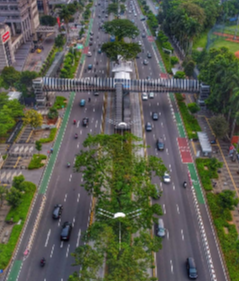
India’s roads bring together trucks, buses, two-wheelers, pedestrians, and fast-moving cars in the same traffic stream. That mix creates constant complexity for drivers and a strong case for intelligent safety systems. Unlike mature markets, India cannot simply copy global ADAS models and expect them to work perfectly in local conditions.
That is why Indian regulators and testing bodies are increasingly focusing on how these systems behave in real-world traffic. The goal is not just to install ADAS hardware, but to make sure it performs reliably in India’s operating environment.
What The Rules Say
India’s regulatory direction has become much clearer in 2026. According to reporting on the latest draft and proposed norms, from 1 April 2026, newly introduced models of large passenger vehicles, buses, and trucks in the M2, M3, N2, and N3 categories must include a defined package of ADAS features. Existing production models are expected to come under the same requirement from 1 October 2026.
The proposed systems include technologies such as autonomous emergency braking, lane departure warning, driver drowsiness detection, blind-spot information, moving-off information, and vehicle stability control. In other words, ADAS is no longer being treated as a nice-to-have add-on for heavy vehicles. It is being positioned as a baseline safety requirement.
Standards Behind The Systems
A mandate is only as effective as the test standards behind it. That is where India’s safety framework becomes especially important. Each ADAS function is being tied to corresponding Automotive Industry Standards, which define performance expectations, test conditions, and evaluation criteria.
This matters because the same technology can behave very differently depending on road markings, traffic density, weather, and driver behavior. India’s testing ecosystem, including ARAI and dedicated validation facilities, is becoming central to proving that these systems work before they reach the road.
Testing For Real India
One of the biggest challenges in India is that the road environment is anything but uniform. Lane markings may be faded, vehicles may cut across traffic suddenly, and vulnerable road users may move unpredictably. That means ADAS tuned for Europe or Japan may not deliver the same performance here without careful calibration.
Testing therefore has to go beyond laboratory validation. It must include Indian traffic scenarios, mixed vehicle classes, and varied urban and highway conditions. That is why India’s emerging ADAS test infrastructure is such
an important part of the story.
What This Means For OEMs
For automakers, the shift is both a challenge and an opportunity. On one hand, adding ADAS means redesigning vehicle platforms, integrating sensors, building software layers, and validating performance under local conditions. On the other hand, it creates a strong competitive advantage for companies that can deliver safety, trust, and compliance at scale.
Commercial-vehicle makers will feel the pressure first, especially because the new rules target buses and trucks before broader passenger-car adoption. But the ripple effect will spread quickly. Once ADAS becomes familiar in fleet and heavy-vehicle segments, consumer demand in the passenger-car market is likely to accelerate too.
The Indian Market Is Catching Up
India’s passenger-vehicle market has already started to show stronger appetite for safety technology. ADAS penetration in passenger-vehicle wholesales is rising, and industry commentary suggests the pace is still building as more buyers become aware of its value. That is an important shift in a market where price sensitivity has historically slowed adoption.
The bigger change may be cultural. Indian car buyers are no longer looking only at styling, infotainment, or fuel economy. Safety has entered the conversation in a more serious way, and ADAS is becoming part of that decision-making process.
Bharat NCAP And Consumer Awareness
India’s Bharat NCAP has also helped move safety further into the spotlight. Launched in 2023, it created a stronger public framework for crash safety, and its planned evolution is expected to include ADAS assessment as well. That is significant because consumer awareness often follows ratings and test results.
When buyers can see that safety systems are tested, rated, and verified, trust rises. And when trust rises, adoption usually follows. In that sense, Bharat NCAP and ADAS regulation are working together to create a more
informed Indian auto market.
The Roadblocks Ahead
Even with clear momentum, the road to full ADAS adoption in India is not smooth. Cost remains a major issue, especially for commercial fleets and mass-market vehicles. Sensors, software, calibration, and validation all add expense, and those costs must be balanced against pricing pressures in a highly competitive market.
There is also the problem of driver behavior. If ADAS systems issue too many false warnings or feel intrusive, drivers may switch them off. That would weaken the very safety benefit the technology is meant to provide. For India, the lesson is clear: successful ADAS cannot just be technically advanced. It must be practical, intuitive, and tuned for local realities.
The Bigger Safety Picture
ADAS is not a substitute for careful driving, strong enforcement, or better road infrastructure. But it is a powerful layer of protection in a country where human error still plays a major role in accidents. If implemented well, these systems can help reduce collision severity, improve lane discipline, and give drivers a second line of defense.
That is why the evolution of ADAS in India should be seen as part of a larger mobility transition. It reflects a maturing automotive industry, a more serious safety mindset, and a regulatory approach that is finally catching up with the scale of the problem.
India’s Next Mobility Chapter
India is entering a phase where safety technology will no longer sit at the edges of the vehicle conversation. It will sit at the center of it. As ADAS moves from luxury cars to commercial fleets and eventually deeper into the wider market, the country has a chance to shape a uniquely Indian safety model one built for crowded roads, mixed traffic, and mass-market affordability.
The real test will be execution. Regulations, standards, and test facilities now provide the framework. What follows must be disciplined implementation, local engineering, and sustained industry cooperation. If that happens, ADAS could become one of the most meaningful automotive safety upgrades India has ever seen.