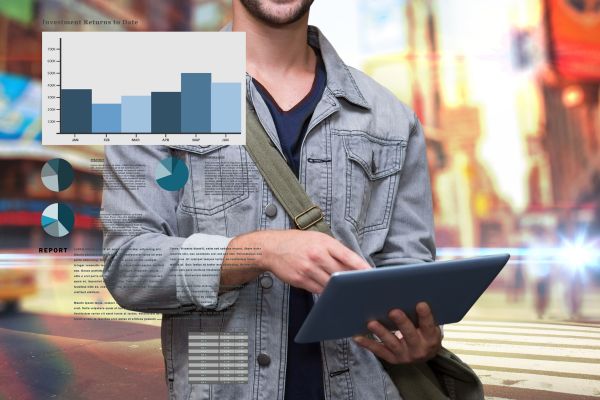
The nature of retail has changed dramatically over the last few years. There has been a transition from being a store-based industry into a data-driven ecosystem where everything that happens in retail is powered by intelligence. Previously, companies relied on historical reporting and batch processes to make informed decisions. Now, data is being captured as granular data events in real-time, allowing for more effective decision-making by retailers.
Another factor that has accelerated the rate of change in retail is the increase in consumer expectations. This shift isn’t just about tech, but it’s a response to the impulse economy. Shoppers now expect a tailor-made experience. Research done by McKinsey stated that 71% of consumers want personalized customer interactions, and 76% of consumers report frustration when they receive a non-personalized experience.
The Evolution of Data Usage in Retail
Retailers have been collecting an array of data well prior to 2021; however, they have had difficulty discovering how to make use of it to their benefit. Many times, these businesses did not fully utilize the available data.
When the world came to a halt in 2021 after the COVID-19 pandemic, everything changed for many retailers. Retailers were able to utilize advanced analytic platforms that allowed them to move from a “windshield view” type of reporting or measuring to one of real-time or current reporting. Today, most retailers are committed to using advanced analytics technologies to provide insights on what is happening right now in the present and with zero drag on daily operations.
Intelligence throughout the Value Chain in Real Time
Retail is still a labor-intensive, complex industry. Multiple functions have operated in silos, leading to inefficiencies and delays in decision-making. Through real-time analytics, these functions are now being brought together into a single, integrated digital view. Data is captured throughout the entire business lifecycle, not simply at the point of sale. This has enabled the concept of a “digital book,” where retailers can view sales forecasts, total sales, cancellations, and reconciliation in one place.
Impact on Personalization, Search and Revenue
The most obvious example is personalization. Using real-time data, retailers can customize product recommendations, pricing, and user experience based on live interactions. Personalization can increase conversion rates by 10-15% and customer satisfaction by as much as 20%. The effect is further increased through advanced analytics-based searches. The conversion rate is increased by one to three times, and the search engines can optimize the conversion rate over 50% higher than the average conversion rate.
Retail Transformation & Expansion through AI
Generative and agentic AI are the new accelerators. These technologies enable large-scale automation of manual processes. AI is now embedded across retail functions: invoices, stores, and customer service. Human-machine collaboration has improved, with many processes fully automated. As a result, retailers are experiencing productivity gains while creating substantial cost savings. AI has now grown to include identifying and explaining patterns as well as recommending actions. This is transforming how executives make decisions.
Technological Foundations and Effects of Operations
The delivery of real-time information is heavily dependent upon developments within three technological areas: cloud computing, distributed computing systems, and event streaming systems. These technologies allow retailers to perform real-time processes with extremely high quantities of data at a rapid rate.
As a result of the constant and real-time flow of data, the modern retail ecosystem is built on a foundation of data. In particular, the use of data provides the information necessary to support critical business use cases. By using the above technologies, retailers can deliver faster cycles of decision-making, allocate resources in a more efficient manner, and operate more effectively within their stores and supply chains.
Real-Time Retailing: Obstacles to Scaling Up
Although real-time analytics has many advantages, there are also a number of challenges associated with the move toward using these types of analytics. Retailers that depend on legacy data structures face difficulties when trying to also achieve integration and modernization of their systems. Organizations need to invest in and support the necessary data quality integration of these systems.
Future of Retailing as an Autonomous process
We are entering the era of autonomous stores. Retailing is transitioning from a focus on real-time response towards methods by developing solutions that not only react to events (using real-time data) but also anticipate them through the use of advanced analytics and artificial intelligence. The increase in the use of artificial intelligence and edge computing will speed this process. According to McKinsey, the value generated by Generative AI is estimated to be between $240B and $390B, and this is for the retail industry, hence the need for leaders to have access to accurate and timely data and information.
Conclusion
Analytics in real time are changing how we look at data being used as a passive asset and, in some cases, turning it into an active driver of performance. Real-time analytics has turned data into an active engine of growth, unlike before when it was just a passive tool, thus completely transforming the way retailers compete, operate, and serve their customers. The question for retailers is no longer whether to adopt these tools but how quickly they can scale. In the next chapter of retail, the winners won’t simply be the fastest to respond; —they will be the ones who had the foresight to see it coming and built the intelligence to act on it.
About Prag:

Prag Tyagi, Director Enterprise Data Platform, 7-Eleven Global Solution Center (GSC)
Prag is an accomplished data engineering leader with over 16 years of experience building high-performing teams and delivering enterprise-scale analytics platforms. As Director of Enterprise Data Platform at 7-Eleven Global Solution Center – India, he leads data engineering and science initiatives across the company’s e-commerce, app, and retail systems.
He oversees the development of large-scale data pipelines and real-time streaming platforms, and drives insights across digital and physical store channels. Prag also manages 7-Eleven’s offshore analytics operations, with a focus on scalable architecture and business impact.
Previously, he held leadership roles at PwC and IBM, delivering data transformation programs for global enterprises. Prag brings deep expertise in distributed systems, modern cloud stacks, and real-time data architecture, and is a strong advocate for developer mentoring and community knowledge sharing.