


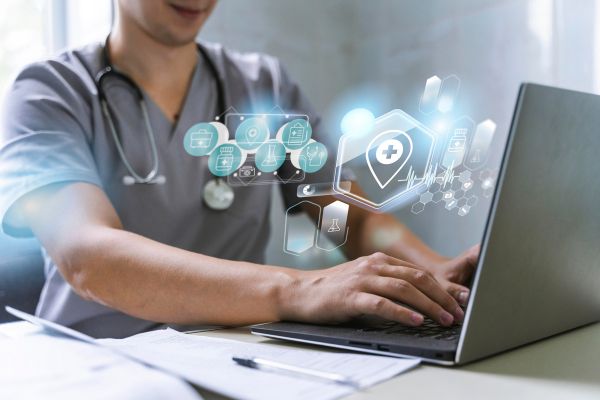
Healthcare, for decades, has been built around moments of appointments, diagnoses, and treatments. But what happens in between those moments has largely remained invisible. Today, that gap is closing. The rise of the Internet of Medical Things (IoMT) is shifting healthcare from episodic intervention to continuous, connected care, where patient data flows seamlessly, and insights are no longer confined to clinical settings.
This transformation is not incremental; it is structural. The IoMT market is projected to grow at a CAGR of over 18% to 25% through 2034, underscoring the scale and urgency of this shift. In parallel, IoMT solutions are estimated to have the potential to save the global healthcare industry nearly $300 billion annually, driven by improved efficiency, early intervention, and reduced hospitalisations. In India, the push toward digital health, combined with the urgency to improve access and efficiency, is accelerating adoption across both urban and remote care environments. What emerges is a healthcare model that is not only more responsive but also more anticipatory.
When Data Becomes the Lifeline of Care
At the heart of this shift lies a simple but powerful idea: better data leads to better decisions. Connected devices from wearable trackers to remote monitoring systems are generating a constant stream of patient data. But data alone is not transformative; integration is. When this information converges with electronic health records, diagnostics, and clinical workflows, it creates a living, breathing view of patient health.
This unified data ecosystem changes the role of healthcare providers. Instead of reacting to symptoms, clinicians can identify patterns, detect early warning signs, and intervene before conditions escalate. The result is not just improved outcomes, but a fundamental redefinition of care from reactive to predictive, from fragmented to holistic.
The Intelligence Layer Driving Modern Healthcare
If data is the foundation, analytics is the intelligence layer that brings IoMT to life. Advanced analytics and artificial intelligence are enabling healthcare systems to move beyond hindsight and into foresight. By analysing vast volumes of structured and unstructured data, these technologies can predict risks, recommend interventions, and support more precise clinical decisions.
In critical care scenarios, where minutes can define outcomes, real-time analytics can detect subtle physiological changes that might otherwise go unnoticed. At a systemic level, analytics is also unlocking efficiencies, optimising resource utilization, reducing hospital readmissions, and enabling smarter capacity planning. In many ways, it is this ability to turn complexity into clarity that defines the true value of connected healthcare.
Redefining Efficiency Through Automation
Parallel to the rise of analytics is the quiet but powerful role of automation. Healthcare systems have long been burdened by manual processes, data entry, monitoring, and administrative workflows that consume valuable time and resources. IoMT is steadily removing these inefficiencies by automating routine tasks and ensuring greater accuracy across operations.
This is not just about saving time; it is about reclaiming focus. When clinicians are freed from repetitive processes, they can dedicate more attention to patient care, empathy, and decision-making. The outcome is a healthcare environment that feels less transactional and more human, even as it becomes more technologically advanced.
The Infrastructure Imperative
Behind every connected device and intelligent insight lies an infrastructure that must be resilient, scalable, and secure. As IoMT ecosystems expand, so does the volume, velocity, and sensitivity of healthcare data. This places unprecedented demands on digital infrastructure, making scalability and security non-negotiable.
Organisations like GTT Data Solutions are enabling this transition by building high-performance data ecosystems that support real-time analytics and seamless interoperability. The ability to handle massive data flows while ensuring data integrity and privacy will ultimately determine how effectively healthcare systems can scale in a connected world.
Empowering the New-Age Patient
Perhaps the most visible impact of IoMT is on the patient experience itself. Today’s patients are no longer passive recipients of care; they are active participants. With access to real-time health insights, personalized recommendations, and remote consultations, individuals are taking greater ownership of their well-being.
This shift is especially significant in a country like India, where access to quality healthcare can vary widely. Connected health technologies are helping bridge these gaps, bringing care closer to patients regardless of geography. In doing so, IoMT is not just improving healthcare delivery—it is democratizing it.
Balancing Innovation with Responsibility
Yet, as with any transformation of this scale, challenges remain. Data privacy, cybersecurity, and interoperability continue to be critical concerns. Healthcare data is among the most sensitive information, and safeguarding it requires robust governance frameworks and continuous innovation. At the same time, regulatory systems must evolve in tandem with technological advancements to ensure both progress and protection.
The Road Ahead
IoMT is no longer an emerging trend—it is fast becoming the backbone of modern healthcare. By weaving together devices, data, and intelligence, it is creating a system that is more connected, more efficient, and ultimately more patient-centric.
As this transformation accelerates, the real differentiator will not just be access to data, but how intelligently it is used. This is where GTT Data Solutions’ vision of Dual Intelligence becomes critical: the seamless integration of human clinical expertise with AI-powered IoMT insights. By combining the intuition and experience of healthcare professionals with the precision and scale of advanced analytics, Dual Intelligence enables more informed decisions, faster interventions, and better patient outcomes.
The future of healthcare will not be defined by isolated breakthroughs, but by how effectively ecosystems can collaborate, scale, and transform data into meaningful action. In that future, IoMT will not just support healthcare, it will shape it.