



In today’s digital-first world, businesses are no longer just buying technology—they are subscribing to it. What began with software through SaaS (Software-as-a-Service) has now evolved into a broader transformation, extending even to physical devices. Enter Hardware-as-a-Service (HaaS)—a model that is quietly but powerfully reshaping how startups build, scale, and deliver value.
Instead of making large upfront investments in hardware, companies can now access devices, infrastructure, and support through flexible subscription-based models. This shift is particularly significant for startups, where agility, cost efficiency, and scalability are critical for survival and growth.
HaaS is not just a financial model—it is a strategic enabler of innovation, unlocking new opportunities across industries ranging from IoT and healthcare to manufacturing and smart cities.
Understanding the HaaS Model
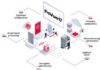
At its core, Hardware-as-a-Service allows businesses to lease or subscribe to hardware rather than purchasing it outright. The service typically includes:
- Physical hardware devices
- Installation and deployment
- Maintenance and upgrades
- Remote monitoring and support
This integrated approach transforms hardware from a capital expense (CapEx) into an operational expense (OpEx), making it far more accessible—especially for startups with limited budgets (IBM, n.d.).
Unlike traditional ownership models, where hardware quickly becomes outdated, HaaS ensures that businesses always have access to up-to-date technology without the burden of managing lifecycle complexities.
Why Startups Are Embracing HaaS
For startups, every decision is a balancing act between innovation and resource constraints. HaaS fits perfectly into this equation by offering flexibility and reducing financial risk.
One of the biggest advantages is cost efficiency. Instead of investing heavily in hardware infrastructure, startups can allocate their resources toward product development, marketing, and scaling operations.
Equally important is scalability. As a startup grows, its hardware needs evolve. HaaS allows companies to scale up or down seamlessly, without the delays and costs associated with procurement and deployment.
Moreover, HaaS reduces the operational burden. Maintenance, upgrades, and troubleshooting are handled by the service provider, allowing startups to focus on their core business.
Research highlights that HaaS represents the “completion of the cloud stack,” extending the benefits of cloud computing to physical infrastructure[2], [3].
The Startup Ecosystem around HaaS
A new generation of startups is building innovative business models around HaaS, redefining how hardware is delivered and consumed.
These startups are not just providing devices—they are offering end-to-end solutions that combine hardware, software, and services into a single package. This integrated approach enhances user experience and creates recurring revenue streams.
For instance, companies in the IoT space are leveraging HaaS to deploy connected devices at scale. Instead of selling sensors or smart devices, they offer them as part of a subscription, bundled with analytics and cloud services.
Similarly, in industries like healthcare, startups are using HaaS to provide medical equipment on demand, enabling hospitals and clinics to access advanced technology without heavy capital investment.
According to industry insights, HaaS startups are gaining traction because they align with the broader shift toward subscription economies and outcome-based services[6].
Key Benefits Driving Adoption
The growing popularity of HaaS can be attributed to several compelling advantages.
First, it democratizes access to advanced technology. Small and medium-sized businesses, which may not have the resources to invest in expensive hardware, can now leverage cutting-edge solutions.
Second, it accelerates innovation. By removing financial and operational barriers, HaaS allows startups to experiment, iterate, and scale more quickly.
Third, it improves customer experience. With bundled services and proactive support, users benefit from seamless and reliable performance.
Finally, HaaS promotes sustainability. By optimizing hardware usage and enabling upgrades rather than replacements, it reduces electronic waste and supports circular economy practices[5].
Challenges in the HaaS Journey
Despite its advantages, HaaS is not without challenges.
One of the primary concerns is dependency on service providers. Businesses must rely on vendors for maintenance, upgrades, and support, which can create risks if service levels are not met.
Another challenge is data security and privacy. As hardware becomes more connected and integrated with cloud systems, ensuring the security of sensitive data becomes critical.
There are also financial considerations. While HaaS reduces upfront costs, long-term subscription fees can add up, making it important for businesses to evaluate total cost of ownership.
Additionally, managing logistics, deployment, and service delivery at scale can be complex, especially for startups operating in multiple regions.
Experts emphasize the need for robust service-level agreements (SLAs) and transparent pricing models to address these challenges effectively[4].
Market Trends and Growth Potential
The HaaS market is experiencing rapid growth, driven by increasing demand for flexible and scalable technology solutions.
Market research indicates that the global HaaS market is expanding across sectors such as IT infrastructure, telecommunications, healthcare, and manufacturing. The rise of IoT and edge computing is further accelerating this growth, as businesses require distributed hardware systems that can be easily managed and scaled[7].
Another key trend is the integration of AI and analytics into HaaS offerings. Service providers are leveraging data to optimize performance, predict maintenance needs, and deliver personalized experiences.
Startups are also exploring niche applications of HaaS, such as robotics, smart retail, and industrial automation. These specialized solutions are creating new revenue streams and driving innovation across industries.
According to recent studies, the HaaS model is expected to become a cornerstone of digital transformation strategies in the coming years[8].
HaaS and the Future of Innovation
As technology continues to evolve, the role of HaaS is set to expand even further.
The convergence of HaaS with emerging technologies such as 5G, edge computing, and AI will unlock new possibilities. For example, real-time data processing at the edge, combined with scalable hardware deployment, can enable advanced applications like autonomous systems and smart infrastructure.
HaaS also aligns with the growing emphasis on outcome-based business models, where customers pay for results rather than ownership. This shift is redefining value creation and driving closer collaboration between providers and users.
In this context, startups have a unique opportunity to lead the way. By embracing HaaS, they can build innovative solutions that are not only cost-effective but also highly adaptable to changing market needs.
The Indian Perspective
In India, the adoption of HaaS is still in its early stages but shows significant promise.
With the government’s focus on digital transformation and initiatives like Digital India, there is a growing demand for scalable and affordable technology solutions. HaaS can play a crucial role in enabling startups and enterprises to access the infrastructure they need without heavy investments.
Sectors such as healthcare, education, and manufacturing stand to benefit greatly from HaaS, particularly in underserved regions where access to advanced technology is limited.
As the startup ecosystem in India continues to grow, HaaS could become a key driver of innovation, helping businesses overcome resource constraints and compete on a global scale.
Conclusion
Hardware-as-a-Service is more than just a business model—it is a paradigm shift in how technology is consumed and delivered.
By transforming hardware into a flexible, service-driven offering, HaaS is enabling startups to innovate faster, scale efficiently, and deliver better value to customers. It is breaking down barriers to entry and creating a more inclusive and dynamic technology landscape.
While challenges remain, the momentum behind HaaS is undeniable. As the subscription economy continues to expand, and as businesses increasingly prioritize agility and efficiency, HaaS is poised to become a defining feature of the modern digital ecosystem.
For startups, the message is clear: the future is not about owning hardware—it is about accessing it intelligently.
References
- IBM (n.d.). What is Hardware-as-a-Service (HaaS)?
- ResearchGate (2014). Hardware as a Service: The Completion of the Cloud Stack.
- ResearchGate (2014). Hardware as a Service: Physical and Virtual Hardware on Demand.
- IEEE CloudCom (2012). Hardware as a Service in Cloud Computing.
- AJProTech (2023). How HaaS is Changing Electronics Service and Support.
- DeviceNow (2023). Hardware-as-a-Service Startups Overview.
- Cognitive Market Research (2024). HaaS Market Report.
- HTF Market Intelligence (2025). Global Hardware-as-a-Service Market.
- Xyte (n.d.). What is HaaS?
- ScienceDirect (2026). Emerging Trends in Hardware-as-a-Service.