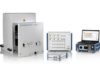
When semiconductor devices fail tests or underperform, various test and measurement instruments can diagnose and solve the issue by precisely measuring electrical characteristics. The appropriate tool depends on the testing stage and the specific problem observed, such as parametric drift, functional errors, or signal integrity issues.
Key issues and their solutions with T&M instruments
1. Parametric drift
This issue, common in manufacturing, involves device parameters like voltage, current, or resistance shifting beyond acceptable limits.
- Symptoms: Incorrect threshold voltages, high leakage currents, or inconsistent output levels.
- Solutions with T&M instruments:
- Source Measure Units (SMUs): A single SMU can both source and measure voltage and current with high precision. This allows engineers to perform quick, accurate current-voltage (I-V) sweeps to trace a device’s parametric curve and pinpoint where it deviates from the ideal.
- Precision LCR meters: These measure inductance, capacitance, and resistance, along with derived parameters like dissipation factor (D) and quality factor (Q). An LCR meter is vital for characterizing passive components and for performing capacitance-voltage (C-V) profiling on junctions to analyze doping profiles and material properties.
2. Signal integrity problems
These are often tied to high-speed digital and mixed-signal devices, causing timing errors and data corruption.
- Symptoms: Jitter, crosstalk, and signal reflections that lead to inaccurate data transfer.
- Solutions with T&M instruments:
- High-bandwidth oscilloscopes: Digital oscilloscopes with high sampling rates capture fast-changing signals and enable analysis of jitter, noise, and signal timing. Advanced scopes offer functions for serial bus decoding and protocol analysis.
- Time-domain reflectometers (TDRs): This instrument sends a pulse down a transmission line and analyzes reflections to locate faults or impedance mismatches. TDRs are essential for evaluating the integrity of interconnects within a semiconductor package.
- Vector Network Analyzers (VNAs): For high-frequency devices, VNAs measure the scattering parameters (S-parameters), which are critical for characterizing performance and ensuring optimal signal transmission in RF circuits.
3. Functional failures and logic errors
When a device does not perform its intended logical operation, a more complex analysis is required to identify the root cause.
- Symptoms: A digital IC fails to execute a command correctly, or an analog circuit provides an incorrect output.
- Solutions with T&M instruments:
- Logic analyzers: These instruments capture and display multiple digital signals simultaneously, allowing engineers to verify the timing relationships and state transitions of digital circuits.
- Mixed-Signal Oscilloscopes (MSOs): An MSO combines the functionality of a digital oscilloscope and a logic analyzer in one instrument. It allows engineers to view and correlate analog and digital signals, which is critical for debugging embedded systems and mixed-signal chips.
- Automated Test Equipment (ATE): For high-volume production, ATE systems are configured with sophisticated test programs to run complex functional and parametric tests on many devices in parallel. While expensive, ATE is invaluable for detecting failures efficiently during manufacturing.
An Automated Test Equipment (ATE) system solves semiconductor testing issues by applying precise stimuli, measuring responses, and diagnosing defects, a crucial process in high-volume manufacturing. The ATE can test semiconductor devices at multiple stages of production, from individual dies on a wafer to fully packaged parts, to ensure they meet specifications.
Common semiconductor testing issues solved by ATE
ATE systems are programmed to identify and solve a wide range of issues that can occur during semiconductor fabrication and assembly.
Manufacturing defects: ATE systems use specific test patterns created by design-for-test (DFT) engineers to identify common manufacturing flaws, such as stuck-at faults (pins stuck at a constant logic high or low) or open and short circuits.
Electrical overstress (EOS) and electrostatic discharge (ESD): ATE can detect failures caused by transient electrical events, which often manifest as burnt metallization, oxide damage, or shorted junctions. Test patterns can specifically check for damage signatures caused by these events.
Performance and timing failures: ATE systems perform AC timing tests to measure dynamic performance parameters like clock-to-output delays. Failures can occur due to process variations, signal integrity issues like crosstalk, or poor power distribution network (PDN) design.
Parametric failures: Issues like current leakage, incorrect voltage levels, or out-of-specification resistance values can be identified by the ATE’s Parametric Measurement Unit (PMU).
Process variations: Variations during manufacturing can cause a chip’s performance to drift from the intended specification. ATE measurements can collect data on these variations to help improve the manufacturing process.
ATE solutions for complex testing issues
As semiconductors become more complex, ATE systems have evolved to address new challenges.
Advanced technologies
Artificial intelligence (AI) and machine learning (ML): AI algorithms can analyze vast quantities of test data to optimize test programs, predict failures, and improve fault coverage. This enables faster and more efficient testing.
Advanced probe card technologies: Specialized probe card designs, such as Microelectromechanical Systems (MEMS) or vertical probes, provide the high precision needed for wafer-level testing of advanced nodes.
Enhanced thermal management: Advanced cooling solutions within the ATE system prevent damage during testing, especially for powerful, high-speed devices that generate significant heat.
Test methodology innovations
System-level test (SLT): SLT complements ATE testing by evaluating devices under real-world conditions that emulate their final use environment. This is especially important for complex systems-on-chip (SoCs).
Adaptive test strategies: This approach dynamically adjusts test parameters based on real-time feedback, focusing testing efforts on higher-risk areas to improve efficiency without sacrificing quality.
Parallel testing: To combat long test times for complex devices, multi-site testing techniques allow multiple devices to be tested simultaneously, which significantly increases throughput.
Flexible test strategies: The industry employs a “shift left” and “shift right” approach to testing. “Shift left” strategies catch defects earlier in the design phase, while “shift right” techniques, like SLT, catch complex functional failures at the end of the production line.
Load board and instrument design
Addressing power delivery issues: On ATE test fixtures, engineers must ensure the power distribution network (PDN) design can handle the high currents and minimize noise for high-speed digital applications. Improper PDN design can impact test results.
Instrument stability: The ATE’s built-in power supplies and measurement cards must be designed to remain stable under varying test conditions. Load board decoupling capacitor choice is critical to ensuring the stability of the power delivery.
Interoperability: Effective communication and collaboration between design, test, and manufacturing teams are critical for translating design specifications into accurate and comprehensive ATE test routines.
4. Reliability and stress-related failures
Long-term reliability issues often appear after extended use or under environmental stress.
- Symptoms: Device performance degrades over time or fails prematurely under high temperature or voltage.
- Solutions with T&M instruments:
- Burn-in testing equipment: This equipment applies voltage stress and elevated temperatures to accelerate aging and reveal “infant mortality” failures in the device. Test programs can be run on ATE or specialized equipment to monitor for failures.
- Environmental test chambers: These specialized chambers expose devices to extreme temperatures, humidity, and other conditions while monitoring performance with integrated T&M tools like SMUs or oscilloscopes.
5. Physical and material defects
Sometimes, the root cause of a failure is a physical flaw from the manufacturing process.
- Symptoms: Manufacturing defects, such as a microscopic crack in the die or a weak bond wire.
- Solutions with T&M instruments:
- Failure analysis tools: High-level analysis tools like Scanning Electron Microscopes (SEM) and Transmission Electron Microscopes (TEM) can visualize the physical structure of a failed chip at a high resolution.
- Optical microscopes (AOI): Less complex issues like cracks, scratches, or other visible defects can be identified with optical inspection using Automatic Optical Inspection.