


Many early wearable and flexible electronics worked as intended in testing environments but failed when deployed in the real world. Devices that seemed to work reliably started failing or degrading once they were subjected to repeated motion. The issue wasn’t the concept; it was the hardware. Designs based on multiple rigid printed circuit boards (PCBs) were not optimized for repeated bending, stretching, or other cyclic mechanical deformations. When rigid components, weak interconnects, and fixed substrates are integrated into systems that bend, stretch, and endure constant motion, the resulting strain can lead to fatigue and instability.
Instead of treating motion as an environmental stressor to be mitigated, engineers of newer designs view deformation as the norm. Therefore, materials, interconnects, sensors, and system architecture are now being developed with mechanical compliance in mind from the start. Engineers are investigating different form factors, interconnects, and power architectures to enable comfort and mobility in continuously monitoring devices, such as medical wearables, smart textiles, and consumer technology. The adjustments they are making help create flexible, wearable electronics that function well outside the lab.
Motion Is a First-Order Design Constraint
By default, wearable systems operate in a mechanically dynamic environment. Whether it’s a human joint flexing, the device stretching across the torso, or even something as subtle as skin shifting during movement, wearables are subject to ongoing deformation during normal use.
Continuous motion introduces several engineering challenges. For example, interconnects are subjected to cyclic strain, which can lead to fatigue and microcracking. These deformities can result in open circuits or sensor outputs that can drift or pick up noise as motion introduces mechanical and electrical interference. If the device is not designed for these repeated deformations, they can accelerate material degradation over time, shortening the device’s lifespan.
Earlier mitigation approaches focused on packaging and reinforcement. In many cases, that meant motion was treated as something to shield the electronics from. This approach was limiting because it separated mechanical behavior from electrical design, even though the two are tightly coupled in a wearable system and can’t be separated late in the design process.
With current designs, engineers no longer view motion as a disturbance. It is now a required design consideration, which means that materials, interconnects, and circuit layouts are developed together. Instead of asking how to prevent movement from damaging the system, engineers define where strain should occur, how it should be distributed, and how the electrical system will behave under those conditions.
This approach re-labels mechanical stress as a design parameter, rather than a failure mode. Once that happens, the rest of the system, including materials, interconnects, sensing, and power, follows the same logic.
Materials That Can Move
Once engineers view motion as a design constraint, the next question becomes how the system can physically accommodate the movement. The answer starts with materials.
Flexible substrates, such as polyimide- or elastomer-based polymers, allow circuits to bend and conform to the body without excessive strain on conductive layers. Rigid boards resist deformation and concentrate stress in traces and solder joints. In contrast, flexible materials bend with the device due to their lower modulus and thin geometry, which distributes strain across the structure. These materials can reduce the risk of fatigue or cracking in the electrical pathways.
The mechanical structure of the substrate also affects how strain is distributed. In a bending system, there is a neutral axis where the strain is minimal. By using thin materials and placing conductive layers near this axis, designers can further minimize both tensile and compressive strain. These features become even more important in applications with repeated motion, where small strains build up into long-term damage.
Conductive materials must also accommodate deformation. Stretchable conductors, such as engineered metal traces or conductive inks, are designed to maintain electrical continuity when bending or stretching. They help avoid open circuits, but deformation can still change the resistance. Designers select materials and devise conductor layouts to keep those changes within acceptable limits.
Another group of materials is used for direct contact with the body, which is important for wearable systems that depend on continuous skin or tissue interaction. In applications like electrocardiogram (ECG) patches, electromyography (EMG) sensors, and glucose monitors, the interface between the device and the body directly affects signal quality and long-term usability.
In these types of systems, bio-compatible materials are suitable when a device needs to sit on the skin or interact with tissue for long periods without irritation. Additionally, biodegradable materials are used in temporary devices that dissolve after use, so they don’t need to be removed. Both options support wearable systems that require reliable contact for safe, continuous monitoring.
Engineers can use layered material stacks to manage strain across the system. By combining materials with different mechanical properties, these structures control the distribution of deformation, rather than concentrating it in a single layer. In a typical flex or stretchable stack, conductive layers are positioned near the neutral axis of the structure where the strain is minimized during bending. This reduces how much stretching and compression the traces and interconnects experience. Softer outer layers, such as elastomers or encapsulants, absorb much of the mechanical deformation, while the stiffer inner layers can provide support and dimensional stability for the components.
Adhesive layers help materials with different stiffnesses move together. Without them, layers may start to separate under repeated motion, breaking connections and leading to unreliable behavior.
Adhesive layers also help distribute mechanical stress instead of allowing it to build up in one spot, which reduces the risk of cracks forming in the structure. In some designs, the stack is built so that bending happens in specific regions, keeping sensitive components out of high-strain areas.
Interconnects as a Primary Failure Point
Even when the materials are compliant, interconnects can still be a significant failure point in a wearable system. Early designs carried over solder joints and copper traces from rigid PCBs, but these were not designed for repeated bending. Over time, cyclic strain led to cracking in conductive paths, and the layers would separate, causing open circuits or gradual resistance shifts that affected performance.
To address this, interconnect design has evolved alongside materials. Routing strategies are now used to control how strain is introduced into the system. Serpentine trace patterns allow conductors to elongate without concentrating stress at a single location. Controlled bend zones define where deformation is expected to occur, keeping strain away from sensitive components. Rigid-flex transitions isolate critical electronics from high-motion regions, reducing mechanical loading on components and solder joints.
Trace routing, layer stacking, and component placements are all used to manage mechanical strain. Interconnect design becomes a critical factor in long-term reliability and cannot be considered after component selection.
Sensor Designs That Deform
In wearable systems, sensors are not just rigid components mounted onto flexible platforms. Sensing elements are often embedded directly into materials so they can move with the body rather than against it. This strategy improves measurement and user comfort while the devices are worn.
Strain sensors and some pressure sensors are designed to operate while bending and stretching, making them useful for motion tracking and certain physiological monitoring applications. However, not all pressure sensors are intended for significant tensile deformation, and not all deformable sensors are suitable for direct use on the body. For these devices to perform reliably, they must maintain consistent electrical behavior under deformation, which requires careful material selection and structural design.
Bioelectric sensors used in ECG and EMG measurements depend on stable skin contact. When the sensor moves with the body, contact with the skin remains more stable, which helps keep the signal clean during movement.
Textile-integrated sensors elevate this approach by embedding sensing elements directly into fabrics. These systems spread sensing across a larger area, enabling the continuous monitoring of movement and physiological signals. In these designs, the sensor becomes part of the structure, not a separate component.
Power, Data, and Packaging Under Strain
Wearable systems are expected to operate continuously while remaining small, lightweight, and comfortable. Those requirements put pressure on power design and data transmission, as well as how the system is protected under constant motion.
Ultra-low power architectures help make this possible. Devices designed for continuous monitoring must run for long periods without increasing their battery size or weight. These requirements demand careful trade-offs between performance and energy consumption so that sensing, processing, and communication can operate in the tight power budgets.
Wireless connectivity adds another constraint. Data must be transmitted reliably while the device is moving, and the device often has limited available power. Designers make connectivity choices by balancing link stability, motion tolerance, and energy use, rather than optimizing for a single factor.
The device enclosure plays a direct role in whether the system survives the real world. Wearables are exposed to sweat, moisture, temperature changes, and repeated bending. To protect internal electronics, engineers use conformal coatings, soft encapsulation materials, moisture barriers, and strain-isolation techniques that allow the device to flex without damaging sensitive components.
PCB layout is also part of this design challenge. Power distribution networks and signal paths must remain stable even as the device bends and deforms. Layout decisions like trace routing, grounding, and component placement are used to maintain signal integrity and consistent power delivery under dynamic conditions.
Today’s Wearables
When these constraints are addressed holistically, wearable systems can successfully perform under continuous motion. These design methods are already being used in many applications where devices must operate outside controlled environments and stay in close contact with the body.
Medical Wearables for Continuous Monitoring
One of the most established applications of flexible electronics is healthcare, where wearable devices can continuously monitor outside of clinical settings.
Skin-conformal patches for ECG, EMG, and respiration tracking are designed to stay in place for long periods while maintaining signal quality during normal daily activity. Devices such as the Zio ECG monitoring patch show how flexible systems can collect reliable data without limiting movement. Smart garments take this a step further by integrating sensors directly into textiles. Systems like Hexoskin shirts monitor cardiac, respiratory, sleep, and activity metrics while remaining comfortable enough for long-term wear. These designs prioritize both durability and data quality in real-world conditions.
Additional healthcare applications continue to expand the role of wearable devices in patient monitoring and diagnostics.
Sports and Motion-Tracking Systems
In sports and performance tracking, wearable electronics are often embedded directly into clothing or equipment.
Textile-based sensors integrated into garments measure strain, pressure, and body movement for a detailed analysis of athletic performance. Systems provide real-time athlete workload and movement data to support training decisions, recovery planning, and injury risk management.
These designs must fight repeated motion, sweat, and regular cleaning, so durability is a key requirement for use. Distributing sensors across the body also enables more complete motion tracking, providing insights into posture, gait, and movement patterns. Rigid sensor modules, such as inertial measurement units (IMUs), are widely used for these measurements, while distributed or flexible sensor systems can offer advantages in conformability, comfort, and localized strain sensing.
Other Noteworthy Applications
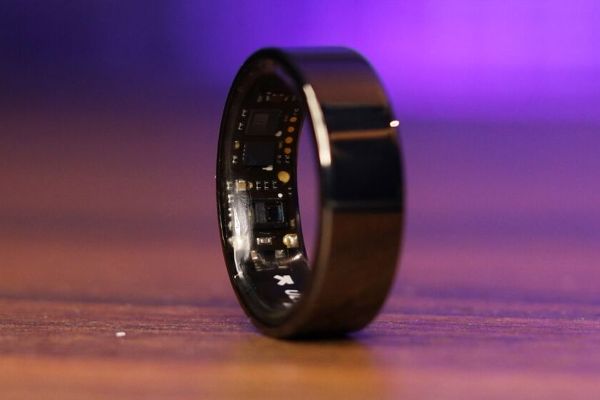
Flexible and wearable electronics are also expanding into consumer, industrial, and immersive technologies. Consumer devices such as smart rings and wrist-worn systems rely on continuous monitoring in tight, comfortable form factors. In workplace environments, wearable systems are being used to monitor fatigue, posture, and environmental conditions to help reduce the risk of overexertion and injury. In augmented reality (AR) and virtual reality (VR) systems, wearable devices, such as haptic gloves, are designed to promote more natural interaction through motion tracking and tactile feedback.
Regardless of the application, the success of a wearable system depends on how well it integrates into everyday use while remaining reliable.
Conclusion
Wearable electronics are advancing as design approaches shift to account for motion from the start. Instead of treating movement as a problem, systems are now built to operate under continuous deformation.
This change affects every part of the design, from materials and interconnects to sensors and system-level power, data, and packaging. Each element is developed to function reliably while the device bends, stretches, and moves with the user.
As a result, wearable systems are becoming more practical across healthcare, sports, consumer devices, and industrial applications. The focus remains on building electronics that can operate outside the lab, providing reliability, comfort, and suitability for real-world use.
Sources
[1]https://conformabledecoders.media.mit.edu/courses/2018/decoders 1.0/John Rogers/Materials and Mechanics for Stretchable Electronics_2010.pdf
[2]https://blog.picamfg.com/flex-pcb-adhesives-and-bonding-guide
[3]https://conformabledecoders.media.mit.edu/courses/2018/decoders 1.0/John Rogers/Materials and Mechanics for Stretchable Electronics_2010.pdf
[4]https://www.irhythmtech.com/us/en
[5]https://hexoskin.com/
[6]https://www.catapult.com
[7]https://www.ehstoday.com/safety-technology/article/21269395/how-wearable-technology-is-transforming-workplace-safety
[8]https://www.senseglove.com/product/nova-2/