
A Quiet Revolution in India’s Fields
Many Indian farmers, as their ancestors did, begin their day early in the morning, before the sun rises over the fields. They walk their farms, look at their crops, think about all the decisions they have to make. But today there is one difference that can be seen in many villages. Some farmers are snatching their smartphones before they head to the field.
To people living in cities, a quick glance at a weather forecast, a market price update, or a crop advisory message may not seem extraordinary. But to a farmer trying to decide when to plant seeds, irrigate crops or sell produce, that information can be priceless. It can mean the difference between making a profit or suffering a loss.
Behind this small change there is a much bigger story. Rural India is slowly changing with technology in agriculture. It is not happening everywhere at the same speed and it is not replacing the experience or wisdom of farmers. Rather, it is providing them with new ways of dealing with old problems. Much of this transformation is less about the technology itself and more about helping people make better decisions.
For generations, Indian agriculture has been responsible for feeding the nation and supporting millions of families. But farming was never easy. A late monsoon, an unexpected pest attack, rising costs or a sudden dip in market prices can undo months of hard work. Farmers have always adapted to challenges, but challenges are becoming more complex.
Agriculture in a Changing World
Talk to farmers across the country and one concern keeps coming up: unpredictability.
Weather patterns are not as consistent as they once were. Rainfall is often late, too heavy, or sometimes does not arrive at all. Heatwaves are becoming more intense and many agricultural regions are experiencing water shortages. Sometimes it is hard to guess what the next season will bring, even for experienced farmers who have worked the land for decades.
At the same time, economics of farming have become tougher. Fertiliser, seed, labour, transport and fuel have all cost more than they did a few years ago. Profits do not necessarily rise with the increase in costs of production.
Many farmers also face post-harvest difficulties. Growing a crop is only half the story. Sometimes finding the right buyer and getting a fair price can be just as difficult. Some farmers are forced to sell quickly because they lack storage or access to wider markets.
There is a growing need for solutions that can help farms operate more efficiently, reduce uncertainty and support farmers in making better decisions due to these pressures.
When Information is a Mighty Weapon
One of the biggest changes technology has brought to farming is information access.
Ten years ago, many farmers relied heavily on local knowledge, personal experience and chats with neighbours. Those sources remain valuable, but are being supplemented by real-time information available through digital platforms.
Farmers can now look at the weather forecast before making important decisions. They can get price information for crops market-wise across regions, learn about crop diseases and get expert recommendation without leaving their villages.
For many farmers, this access to information is as important as access to physical resources.
Suppose a farmer is getting ready to irrigate a field. If the forecast is dependable and precipitation is expected in the next twenty-four hours, irrigation is unnecessary. This saves water, reduces electricity bills and increases efficiency. What used to be decided mostly by gut feeling can now be decided with accurate information.
The same goes for pest management, fertiliser use and harvesting schedules. Good information often makes good things happen.
Technology Comes to the Farm
Perhaps the most obvious sign of change is the increased prominence of technologies once thought of as futuristic.
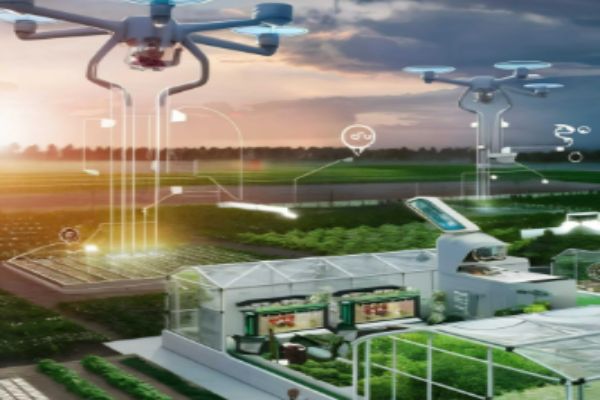
For example, drones are being used more and more in agriculture. Farmers can use drones to check crops from the air instead of walking for hours across huge fields. They can identify areas showing signs of stress, pest infestations and provide a broader picture of crop health.
For many farmers, the appeal is straightforward. Problems can be seen earlier and early intervention often prevents bigger losses down the road.
And now, AI is starting to get a look-in when it comes to making agricultural decisions. AI might sound like a technology for big corporations, but its applications for agriculture are surprisingly down-to-earth. AI tools can analyse data about weather, soil conditions and how crops are performing to make recommendations that help farmers manage their fields better.
Similarly, sensors placed in the soil can monitor moisture levels and report back in real time. Farmers can know exactly when to irrigate instead of guessing.
These technologies do not eliminate uncertainty completely, but they help reduce it. And one of the most valuable benefits of all, in farming, is often simply reducing uncertainty.
The Villages Changing Through Startups
Technology can’t do it alone, unless it reaches the people who need it. This is where India’s growing agri-tech ecosystem is making a difference.
In the past few years, several startups have been tackling real-world agricultural problems. Their success is not in developing complex technologies but rather in providing useful solutions to farmers.
Some platforms enable farmers to buy quality inputs and get expert advice. Some link producers directly to buyers, cutting out middlemen in agricultural trade.
That may seem like a small improvement, but the impact can be huge. When farmers get access to better markets, they often get better prices for their produce. When supply chains are more efficient, less food is wasted. Better decision-making comes with a freer flow of information. This creates a more efficient agricultural ecosystem for everyone.
This makes for a more efficient agricultural ecosystem for all parties involved.
Agriculture To Rural Community Transformation
Technology’s influence isn’t confined to farming itself.
In rural India, the digital revolution is creating new opportunities for young people. A generation that once had to leave villages in search of employment is finding more opportunities nearer home.
Entire new career paths are opening up in logistics, digital services, drone operations, data collection and agri-tech support. Young entrepreneurs are also finding opportunities to develop businesses around agriculture and rural services.
Women, too, are becoming important to this story. Many women are able to participate more actively in economic activities through access to digital platforms and training programmes. Across rural India, young people are finding new opportunities in the digital transformation. A generation that has watched itself driven out of villages in search of work is finding more opportunities closer to home.
Young entrepreneurs are also finding opportunities to start businesses in agriculture and rural services. In some communities, women are running businesses, accessing markets directly and making a big contribution to household incomes.
These changes are transforming what we understand rural economies to be able to do.
Government Support and the Push for Digital Agriculture
Also, change has been accelerated by government initiatives.
Greater technology adoption has been driven by programs to improve digital access, provide financial support to farmers and enhance market connectivity. Digital marketplaces are enabling farmers to reach buyers outside of their immediate region, while financial assistance programmes are helping to alleviate some of the pressures associated with agricultural investment.
Equally important are efforts to enhance rural internet connectivity. Technology is only as good as people’s ability to access it consistently. One of the main needs for future smart farming development is the extension of digital infrastructure.
But experts agree that more investment will be needed to make sure that the technological benefits reach even the most remote farming communities.
Issues That Can’t Be Ignored
But despite the optimism about agri-tech, the challenges remain very real.
Not all farmers have access to reliable internet connectivity. Not every village has the infrastructure for advanced technologies. For many small and marginal farmers, the affordability problem still exists.
There’s also the matter of digital literacy. Young farmers are often quick to adopt new technologies, but some need training and support to feel comfortable with digital tools.
And there’s trust in it, too. Farmers are by nature resistant to change, particularly when it comes to their livelihood. It takes time to become comfortable with technology, and successful adoption is often a function of being able to show tangible, practical benefits. These challenges do not diminish the potential of the technology, but rather underline the need for patience, education and long-term investment.
Future Outlook
The future of Indian agriculture will in all probability be very different from its past.
Artificial intelligence, robotics, satellite monitoring and advanced analytics will become more common. Farms can be connected, decisions can be data-driven and resource management can be efficient.
But perhaps the biggest change is not technological.
The real change is about giving farmers more choice and taking away the uncertainty which has always been part of agricultural life. Technology works best when it augments, rather than replaces, human judgment.
An experienced farmer who knows the land will always be the core of agriculture. Technology merely adds tools to make that expertise stronger.
Not Simply a Technology Story
At first glance, the story of agri-tech is about smartphones, drones, sensors and software. It is actually a story about people.
“It’s about a farmer who now has access to information that he didn’t have before. It is a story of a young entrepreneur who is creating opportunities in a village. It’s about a rural community being more connected to markets, services and economic development.”
The story of Indian agriculture is still unrolled. There will be bumps in the road, lessons and adjustments to be made as you go. But one thing is becoming increasingly clear: technology is no longer something happening on the fringes of agriculture. It’s becoming part of the daily farming life.”
And if this momentum holds, the fields of rural India may not only feed the country in the years ahead – they could also stand as some of the most powerful examples of how innovation can create opportunity where it is needed most.