


The electric vehicle (EV) revolution is no longer on the horizon it’s here, and the very chemistry powering EV batteries sits at the heart of this global transformation. Between 2025 and 2034, the EV battery chemistry market is projected to generate hundreds of millions in revenue, driven by strong collaboration among governments, manufacturers, and innovators. This surge reflects a global push toward sustainable transportation and cleaner energy solutions.
EV batteries are the driving force behind electric cars, buses, scooters, and trucks, evolving from a few core chemistries into a diverse ecosystem. From NMC and LFP to emerging solid-state and lithium-sulfur (Li-S) technologies, each offers unique advantages—whether it’s longer range, faster charging, improved safety, or reduced cost. These advancements are fueling a competitive global race to shape the future of electric mobility.
The Global Momentum
The Asia-Pacific region is set to dominate the EV battery market in 2025, holding nearly 45% of the global share. Backed by industry giants like CATL, BYD, and LG Energy Solution, and strong government support from China, Japan, and South Korea, the region has become the epicenter of EV battery innovation and manufacturing. China leads the pack, having sold over 6 million BEVs in 2024 alone, driven by robust policies and resource availability.
Europe, while smaller in share today, is the fastest-growing region. With investments pouring into giga-factories and a strong emphasis on sustainable EV infrastructure, Europe’s automotive giants Volkswagen, BMW, Audi are not just catching up, they are setting benchmarks. Germany remains the epicenter of this surge, backed by ambitious projects like Northvolt’s new $4.9 billion plant and BMW’s launch of the iX3 SUV with cutting-edge NMC batteries.
North America follows closely, capturing 30% of the industry. Here, policy support and a thriving innovation landscape, including Silicon Valley startups like QuantumScape and Sila Nanotechnologies, are shaping a competitive edge. The U.S. focus has been particularly sharp on scaling battery production and boosting adoption of electric buses to curb emissions. Canada, meanwhile, is finding its own niche in fleet electrification, most recently with Ottawa’s purchase of over 120 electric buses.
Even Latin America and the Middle East & Africa, while smaller markets with only about 5% share, are seeing noteworthy developments. From Brazil’s launch of LFP batteries for hybrid vehicles to the UAE’s aggressive push for charging infrastructure, these regions are laying the foundation for long-term growth.
Chemistry in Action
By chemistry, NMC batteries dominate the landscape, holding around 40% share in 2025. Their widespread use in popular models such as the BMW i3, Hyundai Kona Electric, and Volkswagen ID.3 reflects their superior energy density, versatility, and performance. Recent innovations, such as Turntide’s Gen 5 modular NMC batteries, further showcase the adaptability of this chemistry across industries from automotive to construction and agriculture.
Yet, the real excitement lies in solid-state batteries. With a projected growth rate above 25% through the forecast period, these next-generation power sources promise greater energy density, enhanced safety, and longer lifespans. Automakers like Nissan and Honda are betting big on them, while startups like Rimac have already begun unveiling advanced solid-state solutions built on ProLogium and Mitsubishi Chemical technologies.
Vehicle application tells a similarly dynamic story. Passenger electric vehicles remain the dominant force, accounting for 55% of demand, buoyed by government incentives, luxury EV adoption, and relentless R&D. Meanwhile, two- and three-wheelers especially in markets like India and China are rising at an impressive 15% CAGR, with BYD’s LFP batteries fueling scooters and rickshaws designed for affordability and efficiency.
Building Blocks: Cell Types and End Users
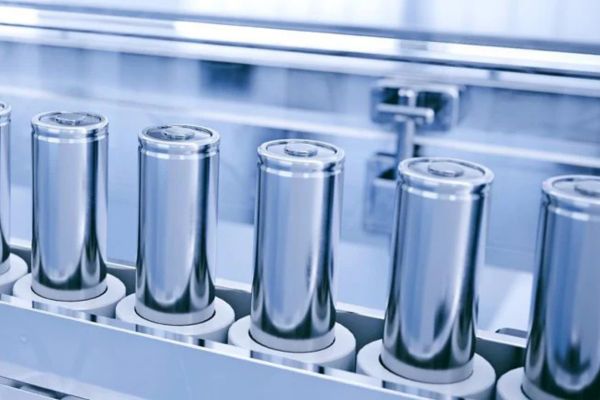
The form of the battery cell is just as critical as its chemistry. Cylindrical cells, favored by Tesla, Rivian, and BMW, lead with 40% of the market, celebrated for their cost-effectiveness, consistency, and heat management. Prismatic cells, holding about 30% share, appeal to manufacturers of trucks and long-range vehicles due to their compact design and higher energy density. GM’s collaboration with LG Energy Solution highlights the rising demand for these cells in heavy-duty applications.
On the buyer side, original equipment manufacturers (OEMs) dominate, representing 60% of the market. Automotive giants like Tesla, Tata Motors, and Vinfast are not only consuming batteries but also investing directly in supply chains and service networks. Meanwhile, aftermarket and retrofit conversions are carving out a niche of their own. Growing popularity of EV modifications, combined with online availability of batteries, is making this segment one of the fastest-growing with a projected 10% CAGR.
The Trends Shaping Tomorrow
The battery chemistry for EVs market is not just about chemistry it’s about strategy. Panasonic’s $4 billion investment in a new U.S. plant, CATL’s partnership with Volkswagen, Stellantis’ joint venture with CATL in Spain, and Clarios’ acquisition of Ecobat for recycling are just a few of the high-profile moves redefining the industry’s direction. Governments, too, are playing their part: the UK’s €63 million infrastructure investment and the UAE’s pledge for 500 new charging stations underscore how public-sector backing is accelerating adoption.
Sustainability is emerging as a key theme. Recycling and second-life initiatives are no longer optional they’re essential. With raw material suppliers like Albemarle and Glencore under pressure to secure sustainable sources of lithium, cobalt, and nickel, recycling partnerships are becoming a central piece of the puzzle.
A Glimpse Into the Future
As the market races forward, the chemistry of EV batteries is proving to be more than just a technical detail it’s the foundation of the EV revolution. NMC may dominate today, but the rapid rise of solid-state, alongside the growing appeal of LFP and lithium-sulfur technologies, shows that the industry is far from settled.
By 2034, the EV battery landscape will likely look very different: faster charging, safer designs, longer ranges, and perhaps entirely new chemistries yet to leave the lab. What remains constant, however, is the unstoppable momentum toward a cleaner, smarter, and more electrified future of transportation.