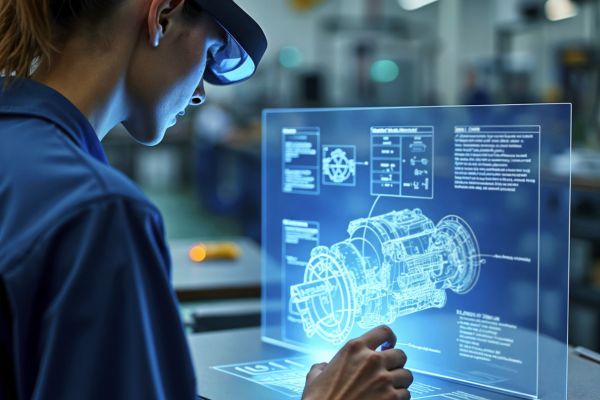
The era of metal dominance is fading. For over a century, manufacturing relied on the stamp of steel and the weld of aluminum. a quieter but far more radical revolution is underway. Factory floors are transforming into high-tech textile mills where weaving replaces welding and robots deposit fibers with the precision of a surgeon.
Advanced composites, particularly Carbon Fiber Reinforced Polymers (CFRPs) and Ceramic Matrix Composites (CMCs), are no longer just exotic materials for Formula 1 cars or fighter jets. They have become the fundamental building blocks of a new mobility paradigm. According to MarketIQuest, the Advanced Composites Market is valued at 40.66 Billion USD in 2024 and is projected to reach 98.86 Billion USD by 2034, with a CAGR of 9.3%. This shift is not merely about using lighter materials. It is about redefining the very nature of how we build, fly, and drive.
The Physics of Efficiency
The driving force behind this transition is undeniable physics. Heavier objects demand more energy to move. In our current era of electric vehicles (EVs) and sustainable aviation, every gram dictates range and efficiency. Traditional metals have hit a performance plateau. Advanced composites offer a strength-to-weight ratio that steel cannot match.
Consider the Gordon Murray Automotive T.50. Its entire carbon fiber monocoque chassis weighs a mere 150 kg (330 lbs). This structural feat proves that safety and rigidity do not require heavy metal cages. Instead, they require intelligent material placement. We are moving from parts that are bolted together to integrated structures that flow continuously.
Automotive: The Automated Revolution
In the automotive sector, the focus has shifted from handcrafted exclusivity to automated precision. The McLaren W1, released as a successor to the legendary P1, exemplifies this shift. It features the “Aerocell,” a carbon fiber monocoque engineered not by hand, but through a process McLaren calls Automated Rapid Tape (ART).
This technology allows for the precise layout of fiber tapes to create a structure that is lighter, stiffer, and stronger than previous generations. By automating the layup process, manufacturers can minimize waste and ensure consistent quality at volumes that were previously impossible.
Koenigsegg is pushing boundaries elsewhere with their Gemera. It utilizes “Aircore” hollow carbon fiber wheels. These reduce unsprung weight significantly, improving handling and acceleration in ways that upgrading an engine never could. For electric vehicles, this weight saving is critical. Batteries are heavy. To gain range without adding more battery mass, the rest of the vehicle must diet. Composites are the only viable solution to this equation.
Aerospace: The High-Volume Challenge
Aerospace has used composites for decades (the Boeing 787 is 50% composite by weight), but the new frontier is Urban Air Mobility (UAM). Companies like Joby Aviation and Archer Aviation are not just building planes; they are attempting to build them at automotive scales.
Archer Aviation has partnered with Hexcel to utilize high-performance carbon fiber prepregs for their “Midnight” eVTOL aircraft. The challenge here is not just flight; it is manufacturability. Traditional aerospace composite manufacturing is slow and labor-intensive. Archer and Joby are industrializing this process to produce thousands of units per year.
Joby Aviation, working with Toray Advanced Composites, is leveraging a strategic partnership with Toyota to apply automotive mass-production techniques to composite airframes. This cross-pollination between car making and plane building is unprecedented. It signals a move toward a “Digital Loom” manufacturing model where fuselage barrels and wing skins are spun into existence by automated heads rather than laid up by hand in a mold.
Manufacturing 2.0: Beyond the Autoclave
The definition of manufacturing itself is changing. We are moving away from subtractive methods like milling to additive and automated methods.
- Automated Fiber Placement (AFP): Robots lay down individual tapes of carbon fiber with microscopic precision. This minimizes waste and allows for complex shapes that metal stamping could never achieve.
- Resin Transfer Molding (RTM): This high-pressure injection method allows for the mass production of composite parts. It solves the historical bottleneck of slow curing times.
- Thermoplastics: Unlike thermosets which take hours to cure in an oven (autoclave), thermoplastics can be heated, shaped, and cooled in minutes. This speed is the key to unlocking composite use in high-volume consumer cars.
The Green Equation
Critics often point to the high energy cost of producing carbon fiber. The industry is answering with bio-composites and recycling. New materials using flax or hemp fibers are being tested for non-structural interiors. Furthermore, the “cradle-to-grave” analysis validates the investment. The fuel and energy saved over the lifespan of a lightweight composite airplane or EV vastly outweigh the energy used to create the material.
Conclusion
Advanced composites are not just materials. They are design enablers. They allow engineers to place strength exactly where it is needed and remove weight where it is not. As manufacturing costs drop and technologies like ART and AFP mature, we are heading toward a future where our vehicles are lighter, safer, and more efficient than ever. The Iron Age is over. The Carbon Age has arrived.