
In today’s rapidly evolving industrial landscape, automation and control systems have become the backbone of modern manufacturing. From streamlining operations to enhancing productivity, these technologies are transforming traditional industries into smart factories.
The industrial automation and control market is experiencing significant growth, driven by the rising demand for efficiency, precision, and reduced human error. Industries such as automotive, oil & gas, energy, pharmaceuticals, and food & beverages are increasingly investing in advanced automation solutions. With the integration of AI, IoT, robotics, and machine learning, businesses are moving toward predictive maintenance, real-time monitoring, and seamless process control.

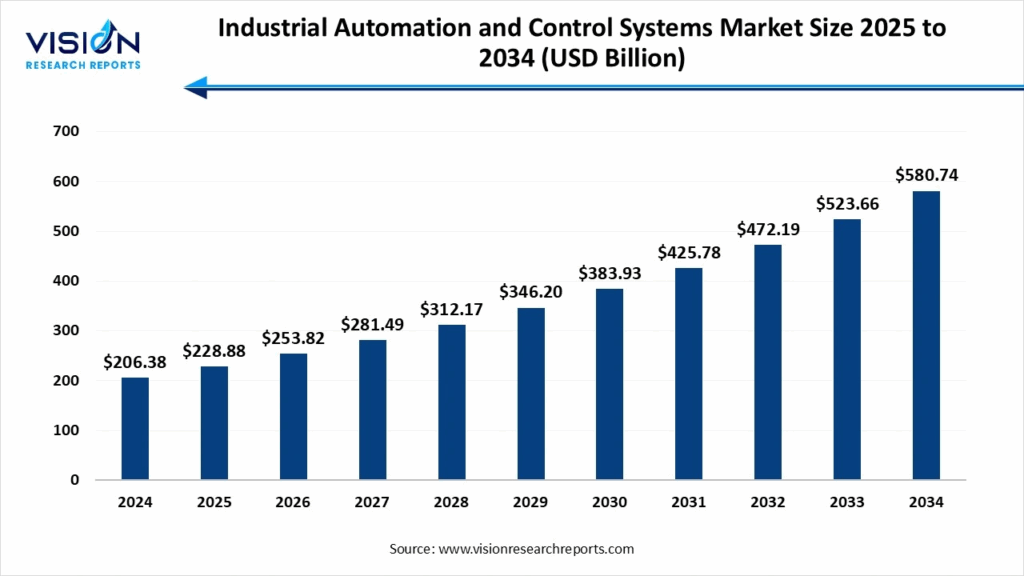
According to Vision Research Reports, the industrial automation and control market size was valued at USD 206.38 billion in 2024 and is projected to reach USD 228.88 billion in 2025. The market is expected to experience robust growth over the coming decade, ultimately hitting USD 580.74 billion by 2034, representing a compound annual growth rate (CAGR) of 10.9%. This growth is driven by increasing demand for smart manufacturing solutions, IoT integration, and advanced control systems across industries such as automotive, energy, pharmaceuticals, and electronics.
Why Businesses Are Choosing Automation
Companies are turning to automation to stay competitive in a rapidly changing world. By introducing automated systems, businesses can cut down on repetitive manual tasks, reduce human errors, and speed up overall production. Smart machines and control systems allow companies to deliver better quality products while quickly adapting to customer needs and market changes. In today’s global economy, automation is no longer optional it’s essential for growth.
Key Benefits of Automation in Industries
Automation delivers multiple advantages that go far beyond simple efficiency. It is reshaping industries by improving how businesses operate and compete in global markets.
- Higher Productivity – Unlike humans, machines can work around the clock without fatigue. This constant operation means industries can produce more in less time, meeting growing consumer demands.
- Consistency in Quality – Automated processes remove human variability, ensuring that every product manufactured has the same quality and standard. This builds customer trust and strengthens brand reputation.
- Safety Improvements – Dangerous and repetitive tasks, such as handling toxic materials or operating heavy machinery, are increasingly being managed by machines. This significantly reduces workplace accidents and ensures employee well-being.
- Lower Operational Costs – By minimizing errors, cutting waste, and using resources more efficiently, automation directly reduces expenses. Over time, businesses see a higher return on investment (ROI) despite the initial setup costs.
Sustainability and Energy Efficiency with Automation
One of the greatest strengths of modern automation lies in its ability to drive sustainability. With businesses under increasing pressure to reduce their environmental footprint, automation provides practical solutions such as energy savings, waste reduction, and lower emissions. Smart sensors automatically switch off unused machines, while advanced control systems optimize energy usage, helping industries cut unnecessary power consumption.
Beyond cost savings, automation supports companies in meeting green regulations and sustainability goals. Automated processes reduce material waste, minimize production errors, and lower carbon footprints, ensuring eco-friendly operations. By aligning productivity with environmental responsibility, automation empowers industries to achieve sustainable growth while building a cleaner and more efficient future.
How Control Systems Make Work Easier
Control systems are often described as the brain of automation because they constantly monitor and regulate machines to ensure everything functions efficiently. In a manufacturing plant, they can automatically adjust temperature, pressure, or machine speed to maintain smooth production. Similarly, in energy plants, these systems help optimize electricity usage, prevent overloads, and reduce the risk of breakdowns.
By taking over these repetitive yet critical tasks, control systems eliminate the need for workers to manually track every detail. This not only reduces the chance of human error but also allows employees to focus on strategic decisions, problem-solving, and innovation. As a result, businesses benefit from smarter operations, increased efficiency, and a workforce that can dedicate its energy to higher-value work.
Challenges Faced in Adopting Automation
While automation has clear benefits, industries often face significant challenges when implementing it:
- High Initial Costs – Purchasing automation equipment, robotics, and software requires substantial investment, which can be a barrier for small and medium-sized businesses.
- Skilled Workforce Gap – Automation requires a workforce skilled in robotics, AI, and control systems. Many industries struggle to recruit and train employees with the right expertise.
- Resistance to Change – Employees may fear job losses or feel uncertain about adapting to new technologies, which can slow adoption.
- Integration Difficulties – Many factories still rely on outdated legacy systems that are not easily compatible with modern automation tools. Integrating both can be time-consuming and costly.
The Future of Automation
The Industrial Automation and Control Market is transforming industries worldwide, redefining how businesses operate, produce, and compete. By enhancing productivity, ensuring workplace safety, and promoting sustainable practices, automation has become the backbone of modern smart manufacturing. Companies that integrate these advanced systems can achieve greater efficiency, higher-quality outputs, and more reliable operations.
Looking ahead, the rise of Industry 4.0 promises even greater opportunities for growth and innovation. Businesses that embrace automation, IoT, AI, and robotics will not only stay ahead of the competition but also set new standards for efficiency, sustainability, and technological excellence, shaping the future of global manufacturing for years to come.