
The global motorcycle airbag market is set for explosive expansion, with revenues projected to surge from USD 638.10 million in 2024 to an impressive USD 2,075.81 million by 2034. This translates to a robust CAGR of 12.52% from 2025 through 2034, fueled by rising motorbike ownership, advanced safety tech integration, and intensifying regulatory pressures across North America, Asia Pacific, and Europe.

As the world’s roads become busier and adventure motorcycling takes off, motorcycle airbags are fast emerging as a must-have safety solution. Innovations in artificial intelligence (AI), sensor tech, and connected wearables, alongside tighter government regulations, are not only saving lives but reshaping the competitive landscape for manufacturers and bikers alike.
Motorcycle Airbag Market: Quick Insights
- Market Valuation: The global market size was valued at $638.10 million in 2024 and is expected to reach $2,075.81 million by 2034.
- Growth Driver: The market is projected to expand at a CAGR of 12.52% from 2025 to 2034.
- Regional Leader: North America dominated the market with a 33% share in 2024, valued at over $210.57 million. The region is expected to grow at a CAGR of 12.69%.
- Fastest-Growing Region: The Asia Pacific region is anticipated to exhibit the fastest growth, driven by a burgeoning middle class and increasing motorcycle adoption.
- Top Segment by Component: The airbag module segment held the highest market share in 2024.
- Top Segment by Motorcycle Type: The touring segment dominated the market in 2024.
- Notable Manufacturers: Dainese, Honda, Yamaha, BMW, Kawasaki
- Key Opportunity: The increasing popularity and technological integration of smart wearables are creating new revenue streams.
- Key Challenge: High costs and limited awareness in developing regions remain significant hurdles.
What’s Powering Market Opportunity and Transformation?
Are Next-Gen Sensors and Smart Wearables the Game-Changer?
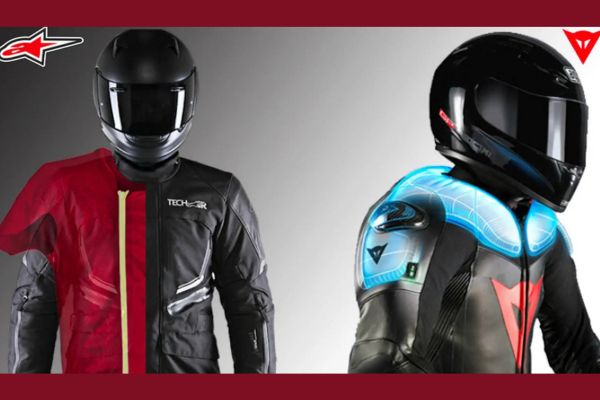
Absolutely. AIR-based and sensor-enabled airbags are now front and center of motorbike safety innovation. Manufacturers are integrating AI-driven sensors and machine learning to detect dangerous scenarios, enabling milliseconds-fast airbag deployment and reducing fatal injuries. In addition, wearable technology, like airbag jackets and vests (Dainese smart jackets, for instance), are increasingly popular for both on-road and off-road riders.
Together, these advances are expanding the market, not only for traditional bike-integrated airbags but also for wearable systems with Bluetooth connectivity and accident alerts, creating new revenue streams and consumer touchpoints.
Expert Quote
“We are witnessing the transformation of motorcycle safety through a fusion of smart technologies and regulatory urgency. Innovations in AI-driven detection and wearable airbags are setting new standards for rider protection, making advanced airbag systems a critical differentiator for brands that value both safety and performance.”
— Priya Kapoor, Principal Consultant, Precedence Research
Motorcycle Airbag Market highlights
- Components: The motorcycle airbag market is primarily divided into airbag modules and crash sensors. Airbag modules, which include the protective bag and inflator, form the backbone of most current systems and account for the largest market share. Crash sensors, however, are seeing the fastest growth as advances in detection technology make airbags more reliable and responsive, particularly in high-risk riding scenarios.
- Motorcycle Type: Touring bikes lead the market owing to their design for long-distance travel, where rider safety is paramount and integrated airbag systems are increasingly standard. Sports bikes are experiencing strong growth fueled by mandatory safety requirements in professional racing and growing demand for premium safety features among enthusiasts.
Motorcycle Airbag Market Coverage
| Report Attribute | Key Statistics |
| Market Size by 2034 | USD 2,075.81 Million |
| Market Size in 2025 | USD 717.99 Million |
| Market Size in 2024 | USD 638.10 Million |
| Market Growth Rate from 2025 to 2034 | CAGR of 12.52%. |
| Dominating Region | North America |
| Fastest Growing Region | Asia Pacific |
| Base Year | 2024 |
| Forecast Period | 2025 to 2034 |
| Segments Covered | Component, Motorcycle Type, and Regions. |
| Regions Covered | North America, Europe, Asia-Pacific, Latin America, and Middle East & Africa. |
Country-Wise Specifications and Market Dynamics in the Motorcycle Airbag Industry
United States (USA)
The USA is the global leader in the motorcycle airbag market, representing about 25% market share, with an expected CAGR of 12.76% from 2025 to 2034. The country enforces robust safety regulations through agencies like the NHTSA. Airbags are progressively integrated into both touring motorcycles and aftermarket wearable gear, particularly for premium segments. Federal support, consumer awareness, and the demand for cutting-edge road safety technology drive high adoption rates.

China
China comprises roughly 14.4% of the global motorcycle airbag market. Stringent regulatory requirements regarding vehicle safety, rising incomes, and heightened public awareness of road safety power rapid adoption. Major local manufacturers are investing in advanced airbag module R&D, supporting quick deployment and more reliable sensor technologies. While currently more focused on automotive airbags, the market for two-wheeler airbags is expanding as urban motorcycle use grows and safety mandates tighten.
Germany
Germany holds a 13.6% market share, supported by Europe’s strictest standards for motorcycle safety. The country follows the EU’s EN 1621-4 standard, making CE-certified airbags the norm for road and racing use. Ongoing innovation and high-income consumers, coupled with mandatory airbag use in professional racing—strengthen market leadership. German brands also collaborate with certification labs to ensure the highest product quality and compliance.
Japan
Japan accounts for approximately 12.4% of the global market, led by early adoption and domestic innovation. Major manufacturers such as Honda and Yamaha integrate airbags into premium motorcycles and play a pioneering role in developing deployable, sensor-based, and space-efficient airbag technologies. Local government and industry initiatives additionally promote wearable airbags, benefiting both commuters and touring riders.
India
Representing 11.1% of the global motorcycle airbag market, India is a fast-growing market propelled by increasing accident rates and evolving safety standards. While airbags are not yet mandatory for two-wheelers, government campaigns and regulatory focus, such as safety harnesses and helmets for children—are increasing public awareness. Rapid urbanization and rising motorcycle sales create significant growth opportunities for both affordable and premium airbag solutions.
Other Notable Countries
- Italy (10.3%) and France: Both nations follow EU standards, with increasing use of EN 1621-4-certified vests and innovation in sustainable, connected airbag tech.
- Mexico (10.2%): The market here is expanding as urban ridership grows and regional distributors focus on affordable safety solutions.
- Australia, Canada, Brazil, UK: Each presents specific opportunities tied to road safety programs, with Australia and Canada seeing notable adoption among adventure and touring enthusiasts.
Emerging Rider Safety Awareness and Growing Demand
The motorcycle airbag market is brimming with growth opportunities driven by rising rider safety awareness, technological advancements, and expanding regulatory mandates. Increasing motorcycle ownership in emerging economies, coupled with a growing middle class, fuels demand for affordable and innovative airbag solutions. Cutting-edge AI-powered sensors and wearable airbag technologies offer enhanced protection and convenience, attracting a wider consumer base. Additionally, stringent safety regulations and insurance incentives in developed regions push OEMs and riders toward incorporating airbags, while the expanding aftermarket retrofit segment provides further avenues for penetration, positioning the market for robust and sustained expansion.
Market Challenges & Cost Pressures:
- Limited awareness in developing regions (e.g., Brazil, Africa, Indonesia), stalling uptake due to low price sensitivity and lack of regulations
- Preference for budget bikes—airbags are often omitted for cost reasons
- Fragmented regulations—absence of global consensus limits OEM incentives to standardize airbags universally
Recent Breakthroughs by Leading Players
- Dainese: Launched smart airbag jackets and vests for adventure bikers, embracing AI-driven detection and Bluetooth features.
- Major OEMs (Honda, Yamaha, BMW, Kawasaki): Focused on factory-fitted airbag modules in premium and touring models, investing in sensor accuracy and automated deployment.
- Aftermarket Specialists: Rapid growth in smart wearable airbag solutions, targeting urban and off-road riders with direct-to-consumer models via e-commerce.
Motorcycle Airbag Market Key Players
- Autoliv
- Honda
- Yamaha
- Takata
- Piaggio