


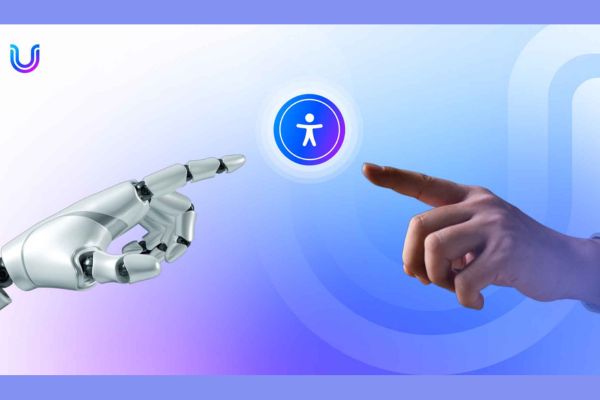
Health, in its truest sense, is not merely the absence of disease—it is the living harmony of body, mind, and spirit. Both ancient wisdom and modern science agree that human well-being unfolds across multiple interconnected realms physical, mental, emotional, and gut health. Each realm represents a different vibration of life energy, flowing through the intricate neural networks that connect the brain, heart, and gut—the triad that defines our holistic intelligence.
Neuroscience today validates what ancient seers understood intuitively our body is a symphony of signals. The vagus nerve serves as the great communicator, linking the brain’s thoughts, the heart’s feelings, and the gut’s intuition. When this communication flows smoothly, we experience coherence—clarity, calm, and creativity. When blocked by chronic stress, digital overstimulation, or emotional repression, this flow falters, manifesting as anxiety, depression, and fatigue.
In the East, the Bhagavad Gita framed health as samatvam yoga uchyate—equanimity in action. It teaches that freedom arises when consciousness rules over chaos, when we act with awareness rather than react out of agitation. In contrast, the Western paradigm has long been captivated by external perception—“Perception is reality,” as the saying goes—and more recently, by The Matrix, a metaphor for humanity’s entrapment in its own illusions. One seeks inner balance; the other grapples with external simulation. The task before us in the 21st century is to reconcile the two—to use technology not as an illusion that enslaves, but as an instrument that enlightens.
This synthesis is already taking shape through technology-enabled mental health. Artificial intelligence, neuroscience, and digital design are converging to transform how we understand and nurture emotional well-being. Meditation apps like Calm, Headspace, and Insight Timer have turned ancient mindfulness practices into daily digital rituals, allowing millions to experience stillness in motion. Wearables such as Fitbit, Oura, and Apple Watch now measure heart-rate variability (HRV), a powerful biomarker of emotional resilience and stress balance. AI-based therapy companions like Wysa and Woebot provide round-the-clock support, combining cognitive behavioral principles with empathetic listening—digital mirrors of care and connection.
Yet, the deeper revolution is philosophical. As I often say, data becomes Dharma when it evolves from measurement to meaning. Emotional analytics platforms can already detect mood shifts from voice tone or typing rhythm, alerting users or caregivers before a mental health crisis occurs. Virtual reality therapies are helping trauma patients safely revisit and reframe painful experiences, while biofeedback technologies enable users to literally see and adjust their emotional patterns in real time.
But even as technology advances, the wisdom of the Gita must guide our innovation. Devices and data can enhance awareness—but they cannot replace it. Emotional well-being cannot be downloaded; it must be cultivated through reflection, discipline, and compassion. In an age of algorithmic addiction and dopamine-driven distraction, our greatest challenge is not to make machines more human, but to ensure humans remain humane.
The next leap in human evolution may not come from artificial intelligence, but from authentic intelligence—the alignment of brain, heart, and gut in service of consciousness. When we bring together the precision of science and the poetry of spirit, innovation itself becomes meditation. In that synthesis, we discover a new paradigm for health from perception to presence, from data to Dharma, from the Matrix to Moksha.
About the Author
Vivek Singhal is an IIT Delhi and University of Michigan alumnus, management consultant, and author of Dominion and Dharma: Reframing Capitalism through Conquest, Consciousness, and Civilizational Memory. His work explores the intersection of technology, consciousness, and civilizational renewal—bridging Eastern spiritual insights with Western innovation to envision a new human future grounded in trust, transparency, and truth.